Get the latest lighting innovations, design trends, and exclusive updates delivered to your inbox.
No spam, unsubscribe at any time. By subscribing, you agree to our privacy policy.

LED dock lights on swing arms, wet-listed fixtures over the door and wall packs for the truck court, configured to order in Twinsburg, Ohio.
The best loading dock lights do three separate jobs at every door: an articulating LED dock light on a swing arm throws light deep into the trailer, a wet-listed fixture over the door lights the apron and the dock plate, and a full cutoff wall pack covers the truck court beyond. Get all three right and a loader can see the back of a 53-foot trailer, the driver can see the door, and the yard stays safe after dark.
Picture a cross-dock at 4 a.m. The seals are pressed tight against a row of trailers, a forklift idles on the leveler, and inside each trailer the only light comes from a yellow lamp head on a folding arm, swung in just far enough to reach the nose load. Outside, sodium-orange floods have given way to crisp LED wall packs, and rain is beading on the door canopies.
Bock builds that whole dock-door kit. The DLL LED dock light is a die-cast aluminum head in high-visibility yellow with a waterproof on/off switch and a 42 inch wall mount arm included. Over the door, a vaportight wall mount or a Step Neck Angle shade lights the apron, and an AWLH wall pack takes care of the court. We configure each fixture to order and ship it from Twinsburg, Ohio.
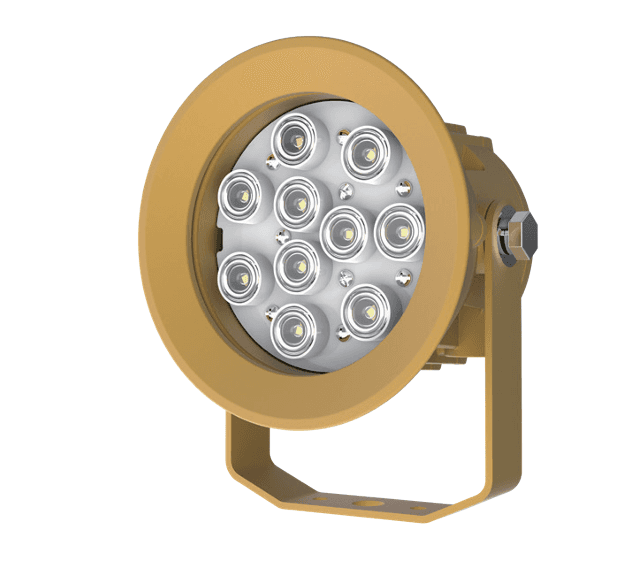
A complete dock-door kit, from the trailer nose to the fence line.
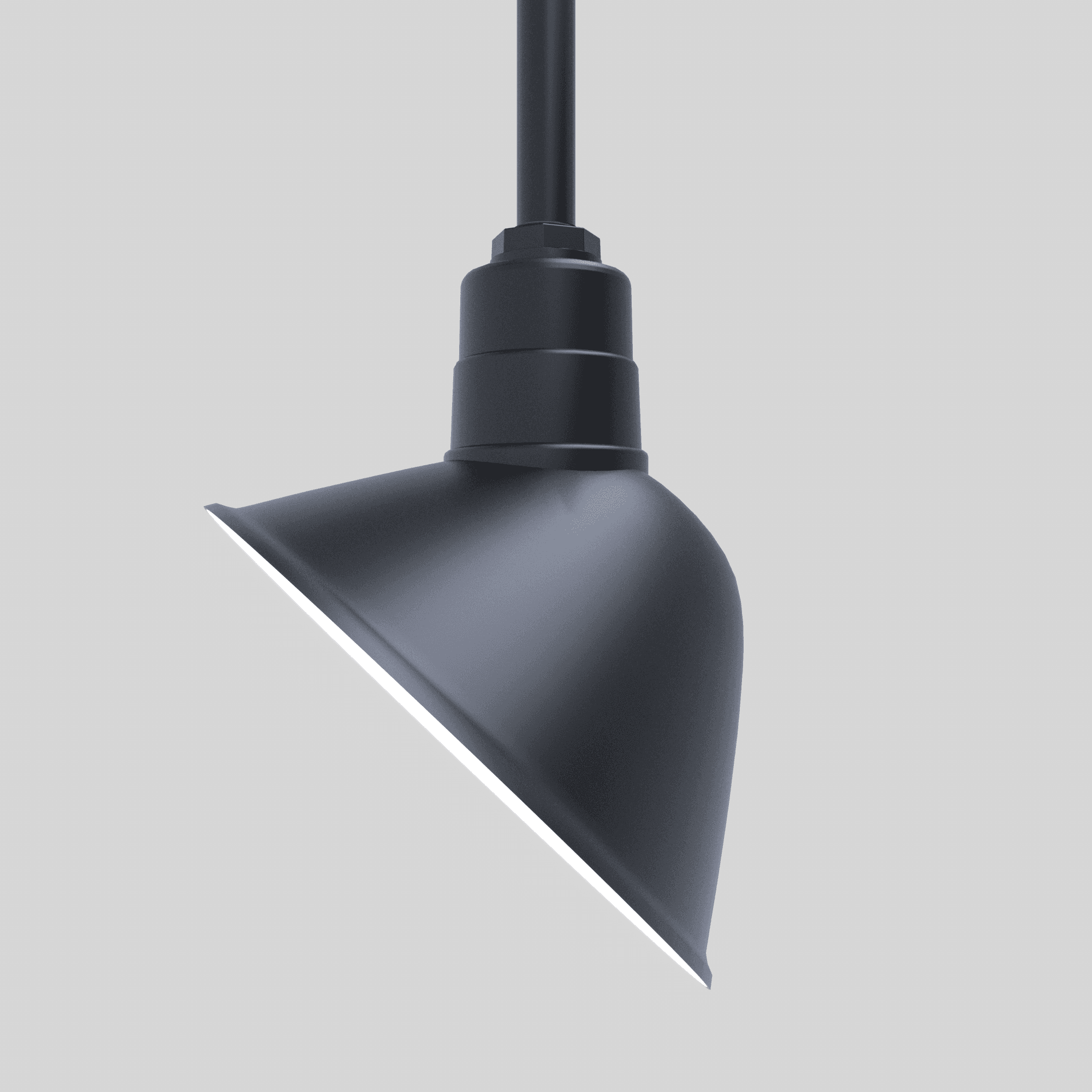
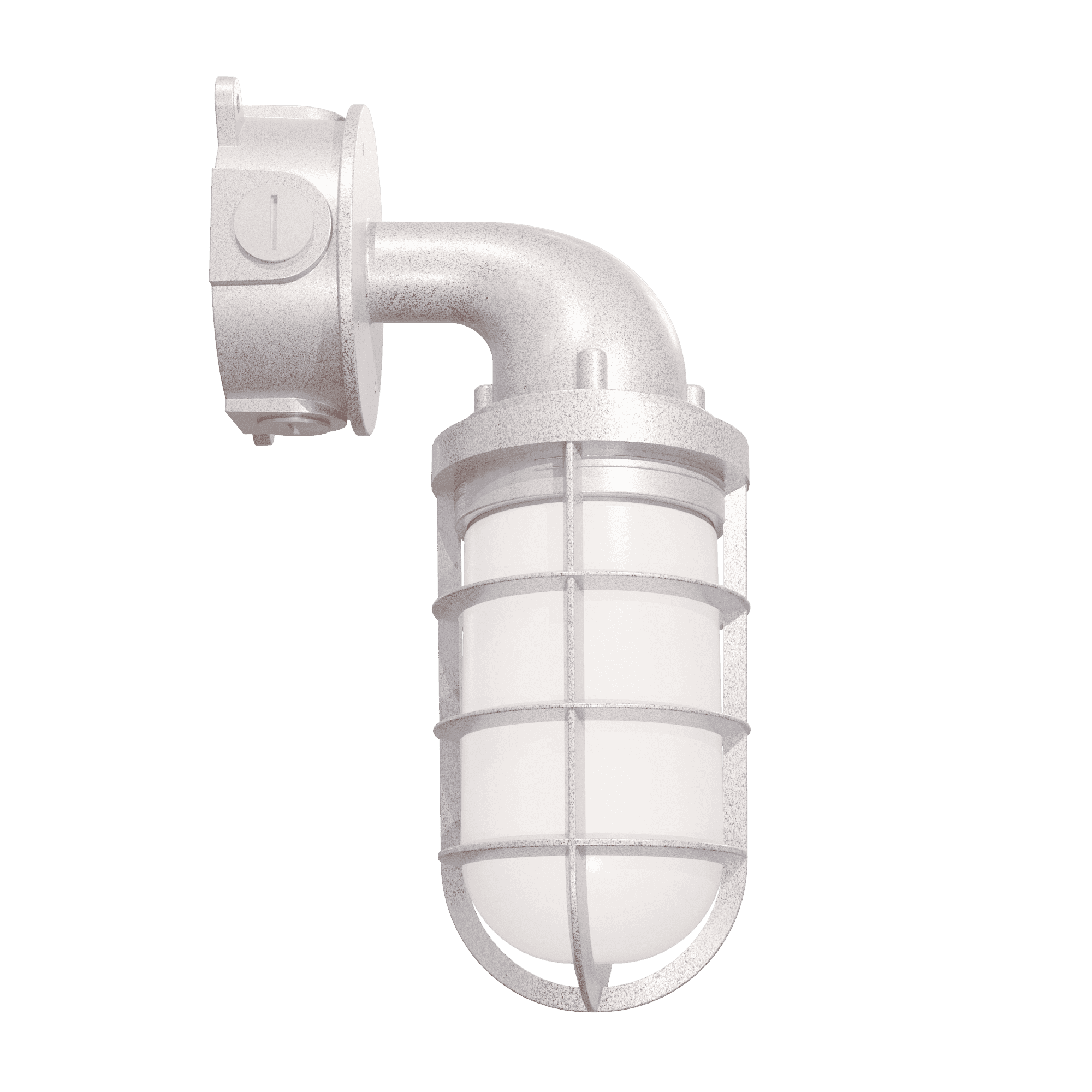
10" Step Neck Angle - SN610
SN610-eG22-iG1 / LAC02-30K / GN23A-G22
In your space
See it in 3D
Spin it, explore the finishes, feel the proportions β before it ships.
Handcrafted
American-made spinnings
Spun, welded and finished by hand β built to last for decades.
Your finish, your way
Hundreds of powder-coat colors
Match the room exactly, or go fully custom.
Truck dock lighting is easiest to plan one door at a time, working from the trailer nose back out to the fence line.
A dock light with an arm mounts on the wall beside the door opening, usually 6 to 8 feet above the dock floor, and folds flat against the wall when a trailer is being spotted. Swung out, it aims straight down the trailer. Common arm lengths run 24 to 60 inches; the longer the arm, the further the head can sit over the opening, but the more it sticks into the path of lift trucks. The DLL ships with a 42 inch arm, a middle reach that clears most door jambs and seals.
Old dock lights used 150 to 500 watt incandescent or halogen lamps that ran hot enough to scorch cardboard and stretch wrap. An LED head runs cool, which is safer when the arm gets pushed against a pallet. The DLL puts out up to 2,900 lumens at 120 V, and 4000 K reads labels and damage clearly.
Outside, each door needs light on the apron, the trailer's rear and the dock plate edge so drivers can back in and loaders can check the seal. Use a fixture with a wet location listing, mounted just above the door header and aimed down:
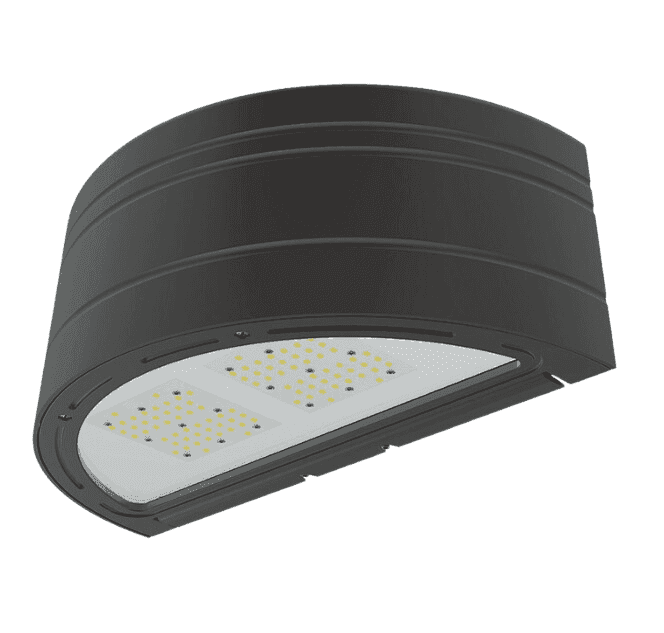
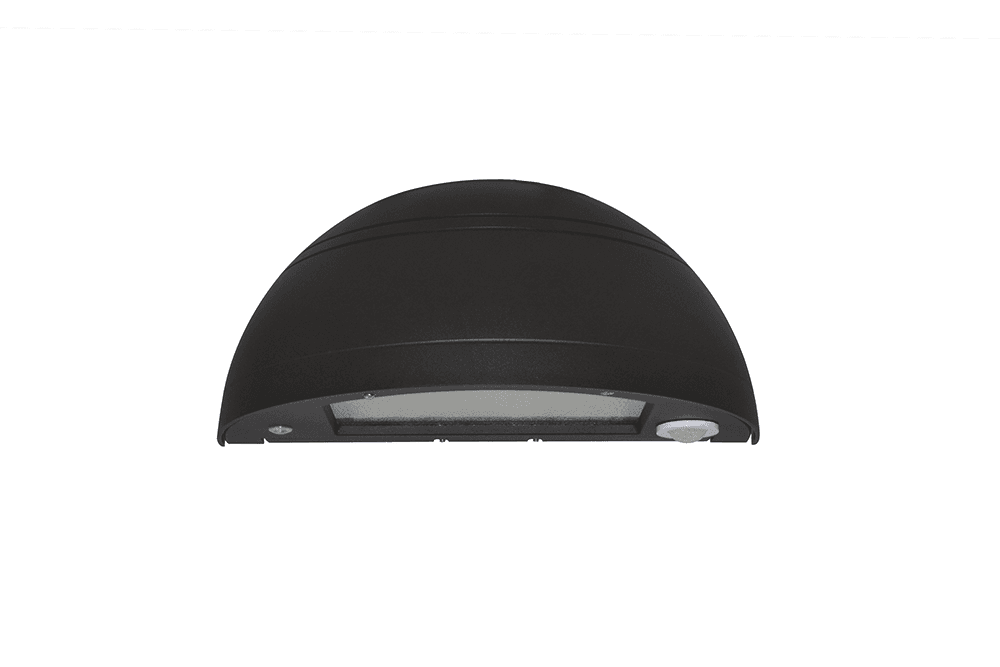
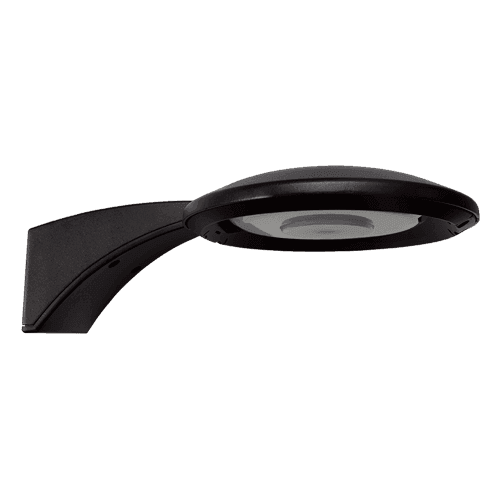
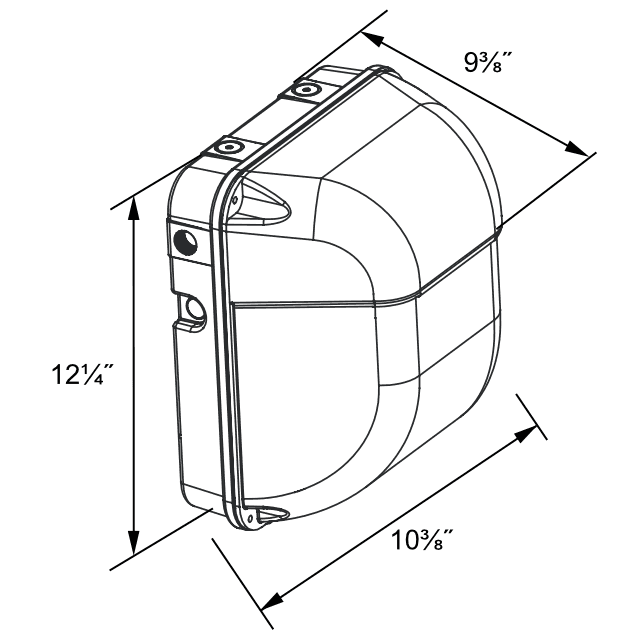
Wall pack lights on the building cover the court between the doors and the fence. The AWLH gives up to 10,000 lumens with field-selectable wattage and color temperature. The AWQS is a low-glare forward-throw pack for walls that face neighbors. For deep yards, the WPAP offers Type II to V optics up to 21,600 lumens and a 347-480 V option. Where light could spill onto homes or roads, specify fixtures that are full cutoff as configured, and check the IES file before you buy.
| Trailer interior | DLL LED dock light Β· 42 in swing arm Β· up to 2,900 lm Β· 4000 K Β· 120 V Β· cULus wet |
|---|---|
| Over the door | VW vaportight with guard, or Step Neck Angle on gooseneck Β· wet listed Β· photocell |
| Truck court | AWLH wall pack Β· up to 10,000 lm Β· 3000/4000/5000 K Β· 120-277 V Β· DLC |
| Walls facing neighbors | AWQS low-glare forward throw Β· up to 8,407 lm Β· DLC 5.1 |
| Deep yards | WPAP Β· Type II-V optics Β· up to 21,600 lm Β· 347-480 V option |
Real installations β see how these fixtures come together in the field.
A dock is where fixtures take the most abuse on a site, so choose for damage, weather and maintenance first.
Check each listing on the spec sheet rather than assuming. The DLL, AWLH and AWQS are cULus listed for wet locations. The FMN and WPAP are ETL/cETLus listed for wet locations. Most swing-arm dock lights are 120 V, so plan a 120 V circuit or a small transformer at each door when the building runs 277 V.
Put a switch at each dock light (the DLL has one on the head) so loaders turn it on only while a trailer is being worked. Put the over-door and court lights on photocells or a time clock. Our FMN wall pack takes a pencil photocell accessory.
OSHA has no rule that names a specific dock light. Its powered-industrial-truck standard, 29 CFR 1910.178(h)(2), requires auxiliary directional lighting on the truck where general lighting is less than 2 lumens per square foot. A good dock light gives the operator enough light inside the trailer to check the floor, the load and the trailer's position before driving in. Your safety manager and insurer set the actual target; IES recommended practices are a common reference.
Walk the dock once a quarter. Tighten arm pivot bolts, replace bent arms before they drop into a trailer, clean lenses, and check gaskets and guards on over-door fixtures.
The best loading dock lights are LED heads on an articulating arm, in a tough die-cast housing with a switch at the fixture. LEDs run cool, last far longer than halogen lamps and don't scorch cardboard. Pair each dock light with a wet-listed fixture over the door and wall packs across the truck court, so the trailer interior, the apron and the yard are all covered.
Send your door count, voltage and yard layout and we'll quote the dock lights, over-door fixtures and wall packs together.

LED dock lights on swing arms, wet-listed fixtures over the door and wall packs for the truck court, configured to order in Twinsburg, Ohio.
The best loading dock lights do three separate jobs at every door: an articulating LED dock light on a swing arm throws light deep into the trailer, a wet-listed fixture over the door lights the apron and the dock plate, and a full cutoff wall pack covers the truck court beyond. Get all three right and a loader can see the back of a 53-foot trailer, the driver can see the door, and the yard stays safe after dark.
Picture a cross-dock at 4 a.m. The seals are pressed tight against a row of trailers, a forklift idles on the leveler, and inside each trailer the only light comes from a yellow lamp head on a folding arm, swung in just far enough to reach the nose load. Outside, sodium-orange floods have given way to crisp LED wall packs, and rain is beading on the door canopies.
Bock builds that whole dock-door kit. The DLL LED dock light is a die-cast aluminum head in high-visibility yellow with a waterproof on/off switch and a 42 inch wall mount arm included. Over the door, a vaportight wall mount or a Step Neck Angle shade lights the apron, and an AWLH wall pack takes care of the court. We configure each fixture to order and ship it from Twinsburg, Ohio.
A complete dock-door kit, from the trailer nose to the fence line.
10" Step Neck Angle - SN610
SN610-eG22-iG1 / LAC02-30K / GN23A-G22
In your space
See it in 3D
Spin it, explore the finishes, feel the proportions β before it ships.
Handcrafted
American-made spinnings
Spun, welded and finished by hand β built to last for decades.
Your finish, your way
Hundreds of powder-coat colors
Match the room exactly, or go fully custom.
Truck dock lighting is easiest to plan one door at a time, working from the trailer nose back out to the fence line.
A dock light with an arm mounts on the wall beside the door opening, usually 6 to 8 feet above the dock floor, and folds flat against the wall when a trailer is being spotted. Swung out, it aims straight down the trailer. Common arm lengths run 24 to 60 inches; the longer the arm, the further the head can sit over the opening, but the more it sticks into the path of lift trucks. The DLL ships with a 42 inch arm, a middle reach that clears most door jambs and seals.
Old dock lights used 150 to 500 watt incandescent or halogen lamps that ran hot enough to scorch cardboard and stretch wrap. An LED head runs cool, which is safer when the arm gets pushed against a pallet. The DLL puts out up to 2,900 lumens at 120 V, and 4000 K reads labels and damage clearly.
Outside, each door needs light on the apron, the trailer's rear and the dock plate edge so drivers can back in and loaders can check the seal. Use a fixture with a wet location listing, mounted just above the door header and aimed down:
Wall pack lights on the building cover the court between the doors and the fence. The AWLH gives up to 10,000 lumens with field-selectable wattage and color temperature. The AWQS is a low-glare forward-throw pack for walls that face neighbors. For deep yards, the WPAP offers Type II to V optics up to 21,600 lumens and a 347-480 V option. Where light could spill onto homes or roads, specify fixtures that are full cutoff as configured, and check the IES file before you buy.
| Trailer interior | DLL LED dock light Β· 42 in swing arm Β· up to 2,900 lm Β· 4000 K Β· 120 V Β· cULus wet |
|---|---|
| Over the door | VW vaportight with guard, or Step Neck Angle on gooseneck Β· wet listed Β· photocell |
| Truck court | AWLH wall pack Β· up to 10,000 lm Β· 3000/4000/5000 K Β· 120-277 V Β· DLC |
| Walls facing neighbors | AWQS low-glare forward throw Β· up to 8,407 lm Β· DLC 5.1 |
| Deep yards | WPAP Β· Type II-V optics Β· up to 21,600 lm Β· 347-480 V option |
Real installations β see how these fixtures come together in the field.
A dock is where fixtures take the most abuse on a site, so choose for damage, weather and maintenance first.
Check each listing on the spec sheet rather than assuming. The DLL, AWLH and AWQS are cULus listed for wet locations. The FMN and WPAP are ETL/cETLus listed for wet locations. Most swing-arm dock lights are 120 V, so plan a 120 V circuit or a small transformer at each door when the building runs 277 V.
Put a switch at each dock light (the DLL has one on the head) so loaders turn it on only while a trailer is being worked. Put the over-door and court lights on photocells or a time clock. Our FMN wall pack takes a pencil photocell accessory.
OSHA has no rule that names a specific dock light. Its powered-industrial-truck standard, 29 CFR 1910.178(h)(2), requires auxiliary directional lighting on the truck where general lighting is less than 2 lumens per square foot. A good dock light gives the operator enough light inside the trailer to check the floor, the load and the trailer's position before driving in. Your safety manager and insurer set the actual target; IES recommended practices are a common reference.
Walk the dock once a quarter. Tighten arm pivot bolts, replace bent arms before they drop into a trailer, clean lenses, and check gaskets and guards on over-door fixtures.
The best loading dock lights are LED heads on an articulating arm, in a tough die-cast housing with a switch at the fixture. LEDs run cool, last far longer than halogen lamps and don't scorch cardboard. Pair each dock light with a wet-listed fixture over the door and wall packs across the truck court, so the trailer interior, the apron and the yard are all covered.
Send your door count, voltage and yard layout and we'll quote the dock lights, over-door fixtures and wall packs together.