Lighting Requirements in Palm Valley, Texas
Lighting Regulations in Palm Valley, Texas: A Guide to Maintaining Community Character
Introduction
Palm Valley, Texas, a small city with just over 1,400 residents in Cameron County, has carefully developed its community since its incorporation in 1965. As part of the Brownsville-Harlingen metropolitan area, Palm Valley maintains its distinct identity characterized by suburban residential environments and natural beauty.
The city's approach to lighting regulations reflects its commitment to preserving a peaceful small-town atmosphere while ensuring safety and functionality. These regulations aim to minimize light pollution, maintain the community's aesthetic appeal, and support environmental preservation - all values that are central to Palm Valley's identity.
Quick Reference Guide to Palm Valley Lighting Regulations
Palm Valley has focused lighting regulations in specific areas rather than comprehensive general lighting codes. Key requirements include:
- Antenna Radio Arrays (ARA)
- Illumination permitted only as required by FAA regulations
- Security lighting must prevent glare and excess spillover onto adjacent properties
- Parking Areas
- "Low profile" fixtures required
- Lights must be arranged to reflect away from residential areas
- All lighting requires Building and Permit Committee approval
- Signage
- Both direct and indirect lighting permitted for most sign types
- No unshielded lights allowed for projecting signs
- Sign lighting must be maintained in operating condition

Antenna Radio Array Lighting Requirements
Safety vs. Light Pollution Balance
Palm Valley's regulations for antenna radio arrays demonstrate a careful balance between safety requirements and community aesthetics. These structures must only be illuminated when necessary to comply with Federal Aviation Administration (FAA) requirements.
Security Lighting Considerations
While safety lighting is required per federal standards, the city allows for security lighting with important limitations:
- Must be designed and installed to prevent glare
- Must not allow excess light spillover onto adjacent properties
This approach ensures that essential communication infrastructure remains safe without negatively impacting the residential character of the community.
Parking Area Lighting Standards
Low Profile Fixtures
Palm Valley requires parking area lighting to use "low profile" type fixtures. This requirement helps maintain the visual character of the community while providing necessary illumination for safety and security.
Directional Requirements
The code specifically addresses light direction, stating that parking area lights "shall be so arranged so as to reflect away from any adjacent residential use or residential district." This requirement minimizes light trespass and prevents unwanted illumination of residential properties.
Approval Process
An important aspect of Palm Valley's lighting approach is the oversight provided by the Building and Permit Committee:
- All lighting must be approved by the committee
- Approval is based on compatibility and conformity with adjacent lighting
- This ensures a cohesive lighting approach throughout the community
.jpg&w=3840&q=75&dpl=dpl_6kKC3Tuq5JtKEvKnJLk4FTKWJrSd)
.jpg&w=3840&q=75&dpl=dpl_6kKC3Tuq5JtKEvKnJLk4FTKWJrSd)
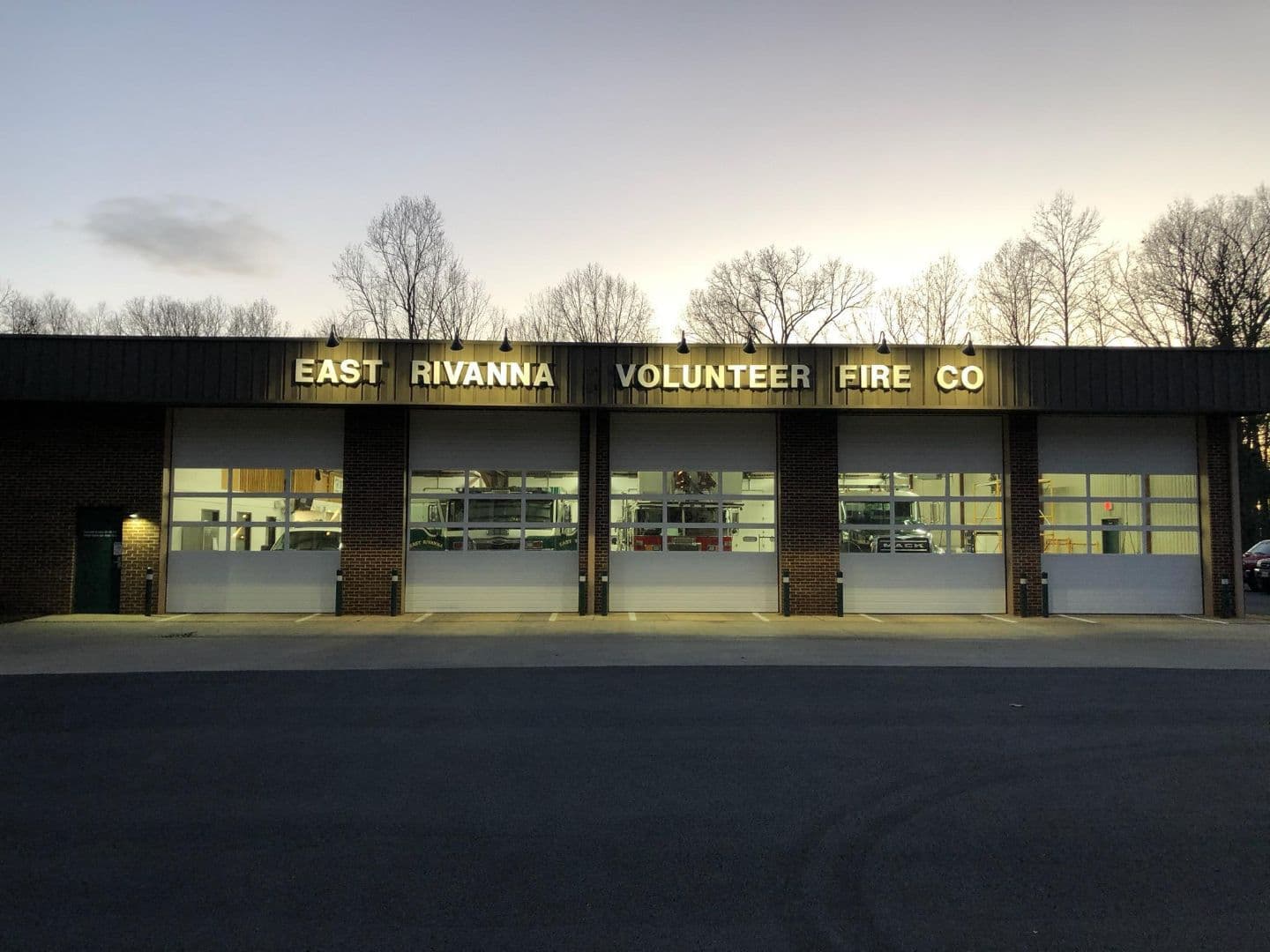
East Rivanna Volunteer Fire Co.
Keswick, Virginia
Sign Lighting Regulations
Types of Permitted Lighting
Palm Valley defines "indirect lighting" as "a light source separated from the surface and illuminating the sign surface by means of spotlights or similar fixtures." Both direct and indirect lighting are permitted for most sign types.
Residential Sign Lighting Options
The following residential sign types may use direct or indirect lighting:
- Residential nameplate signs
- Permanent multi-family identification signs
- Subdivision identification signs
Commercial Sign Lighting Options
Commercial signs have similar options for illumination:
- Multi-Tenant Centers and Office Complexes:
- Monument signs: Direct or indirect lighting
- Joint directory commercial signs: Direct or indirect lighting
- Nameplate signs: Direct or indirect lighting
- Single Business Use:
- Monument double-faced signs: Direct or indirect lighting
- Nameplate signs: Direct or indirect lighting
Safety Requirements for Projecting Signs
The code includes specific safety requirements for projecting sign lighting:
- No unshielded lights are permitted
- Lighting fixtures must be placed to avoid damage from high winds
Maintenance Requirements
Sign lighting must be maintained in operating condition, with repairs required within 30 days of notification of non-functioning lights.
What Property Owners Should Know
Approval Before Installation
The Palm Valley regulations emphasize the need for approval from the Building and Permit Committee. Property owners should consult with the committee before installing new lighting to ensure compliance with local standards.
Focus on Compatibility
A recurring theme in Palm Valley's lighting regulations is compatibility with surrounding properties. When planning lighting installations, consider how your lighting will integrate with neighboring properties.
Limited Light Trespass
Multiple regulations address the need to prevent light from spilling onto adjacent properties. When installing lighting:
- Use fixtures that direct light downward
- Install shields if needed
- Position lights away from property lines
Maintenance Requirements
The regulations specifically mention the need to maintain lighting in operating condition. Regular inspection and prompt repair of lighting issues will help maintain compliance.
Denver, Colorado
Supporting Palm Valley's Lighting Vision
Palm Valley's focused approach to lighting regulations reflects its commitment to preserving community character while ensuring safety and functionality. The city's regulations demonstrate a balanced approach that:
- Respects the residential character of the community
- Prevents excessive light pollution
- Maintains consistency in lighting throughout the city
- Addresses specific contexts like parking areas and signage
This thoughtful approach to lighting helps Palm Valley maintain its distinctive small-town atmosphere while accommodating necessary development.
Conclusion
Palm Valley's lighting regulations, while not comprehensive, provide targeted guidance for specific contexts like antenna arrays, parking areas, and signage. These regulations reflect the community's commitment to maintaining its peaceful, residential character while ensuring safety and functionality.
Property owners should work closely with the Building and Permit Committee to ensure their lighting plans align with community standards. By adhering to these regulations, residents and businesses contribute to preserving Palm Valley's unique identity and high quality of life.
Remember that lighting plans require approval based on compatibility with adjacent lighting, reflecting the city's cohesive approach to community development. This collaborative process helps maintain the aesthetic and environmental qualities that make Palm Valley a desirable place to live.