Recevez les dernières innovations en éclairage, tendances de design et mises à jour exclusives dans votre boîte de réception.
Pas de pourriel, désabonnez-vous à tout moment. En vous abonnant, vous acceptez notre politique de confidentialité.

Spun-metal RLMs, glass and acrylic pendants, sconces and sign lights, configured and built to order for dining rooms, bars, patios and façades.
Good restaurant lighting is warm, dimmable and layered: low pendants that pool light on each table, softer ambient light in the room, and brighter accents at the bar, the host stand and the sign out front. Pick 2700K to 3000K sources with high color rendering so food looks like food, and shield every lamp from a seated guest's eye.
Picture the room at 7:40 on a Friday. The sign over the brick is lit, the door opens onto a host stand in a warm pool of light, and past it every table glows under its own shade while the edges of the room fall away. Nobody notices the fixtures. They notice that the brisket looks right and their friends look good.
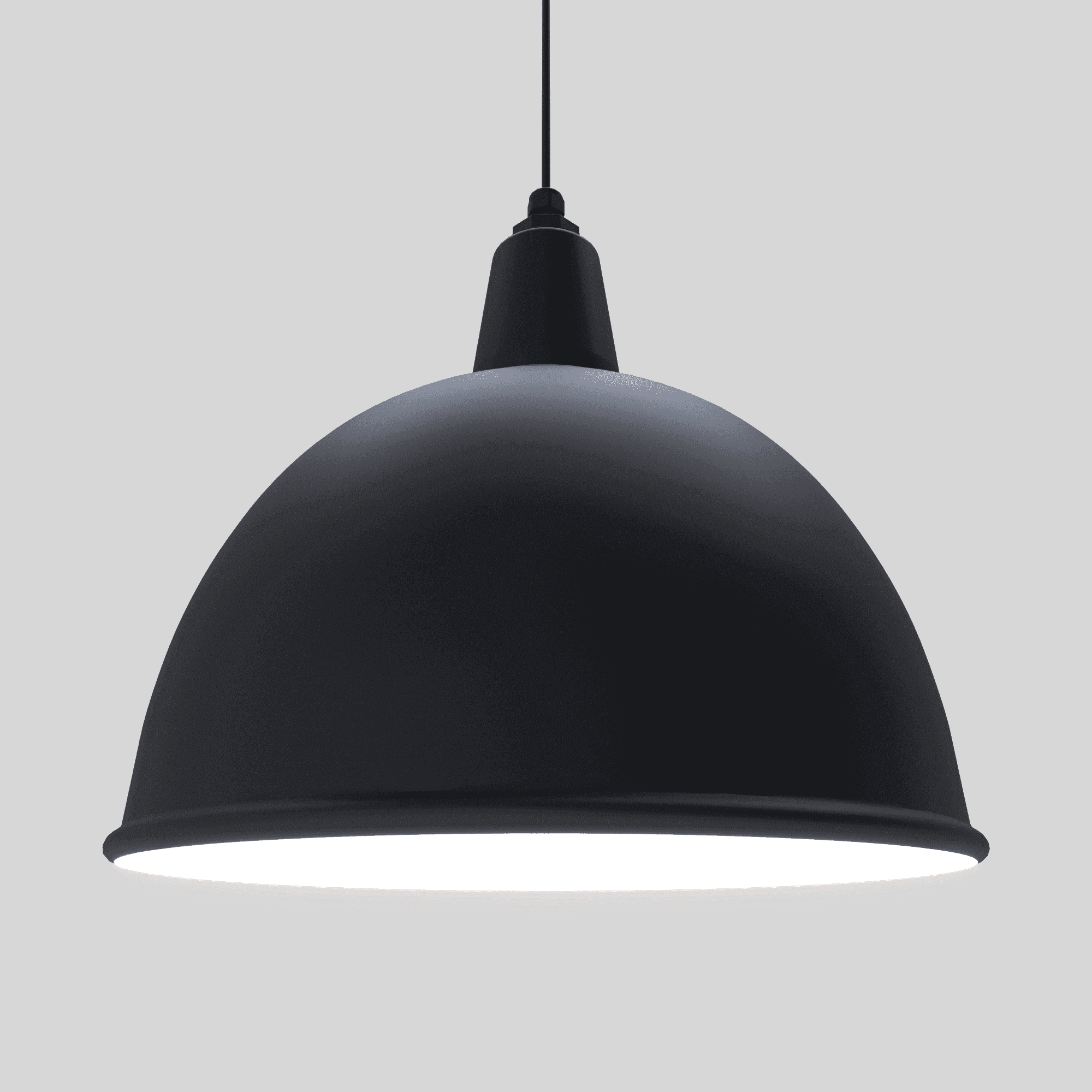
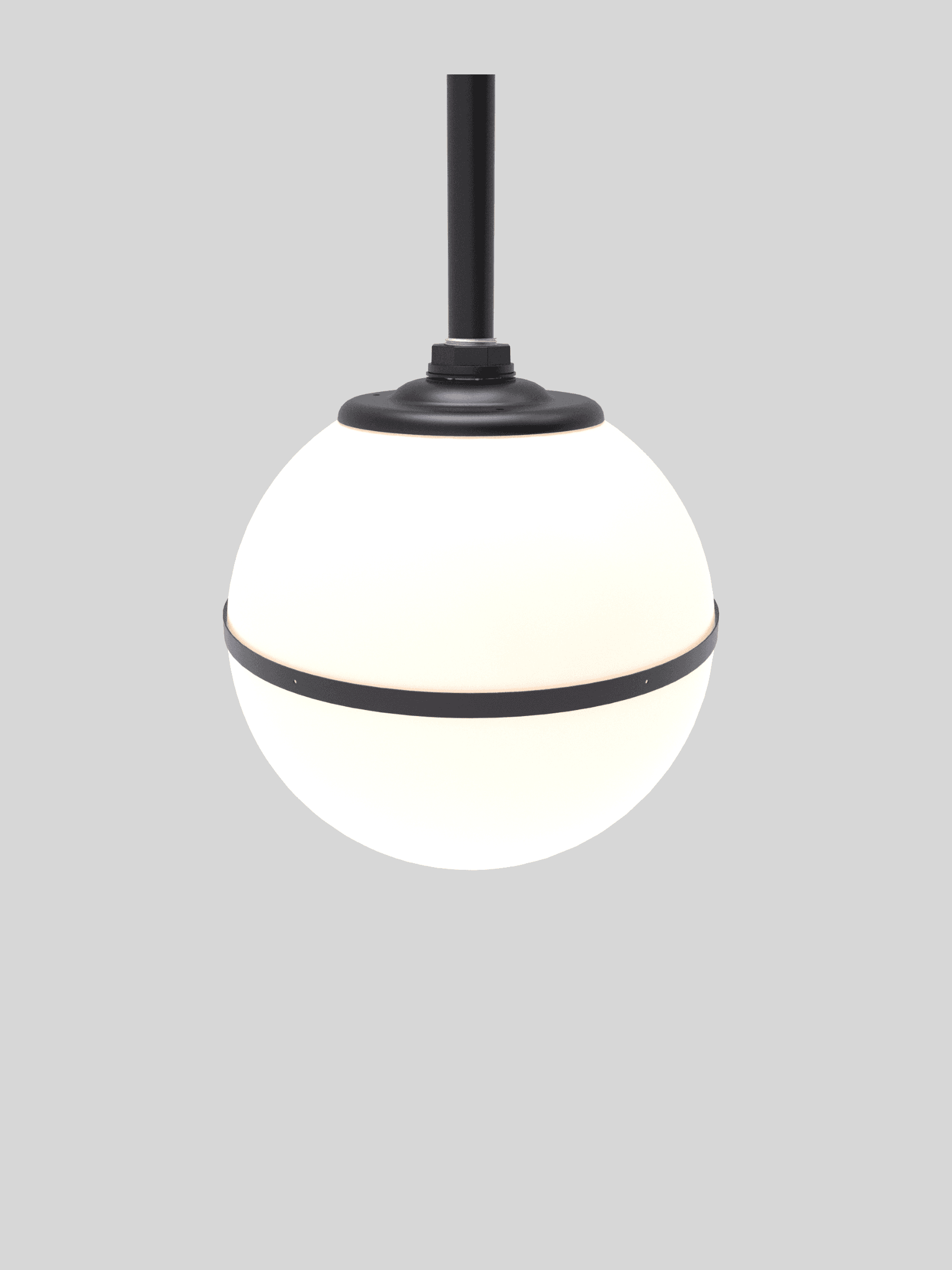
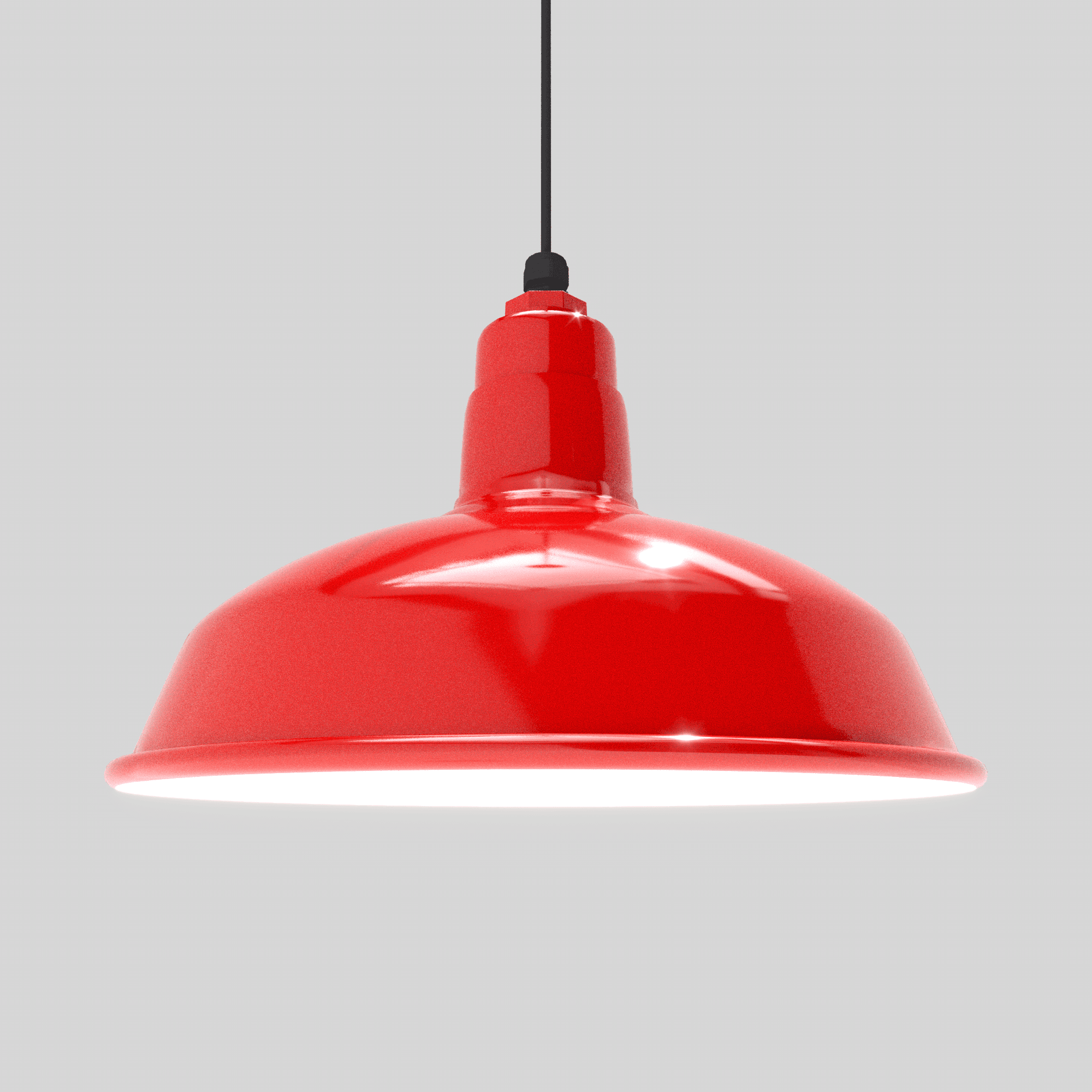
That effect is planned zone by zone. Bock, headquartered in Twinsburg, Ohio, configures and builds restaurant lighting fixtures to order: spun-aluminum RLM shades like the Step Neck Dome and Standard Dome, decorative pendants in hand-blown glass and acrylic, and wet-listed sconces and sign lights for the patio and façade. Each one is configured to order in size, mounting and powder-coat color, so the dining room, the bar and the building outside can share one look.
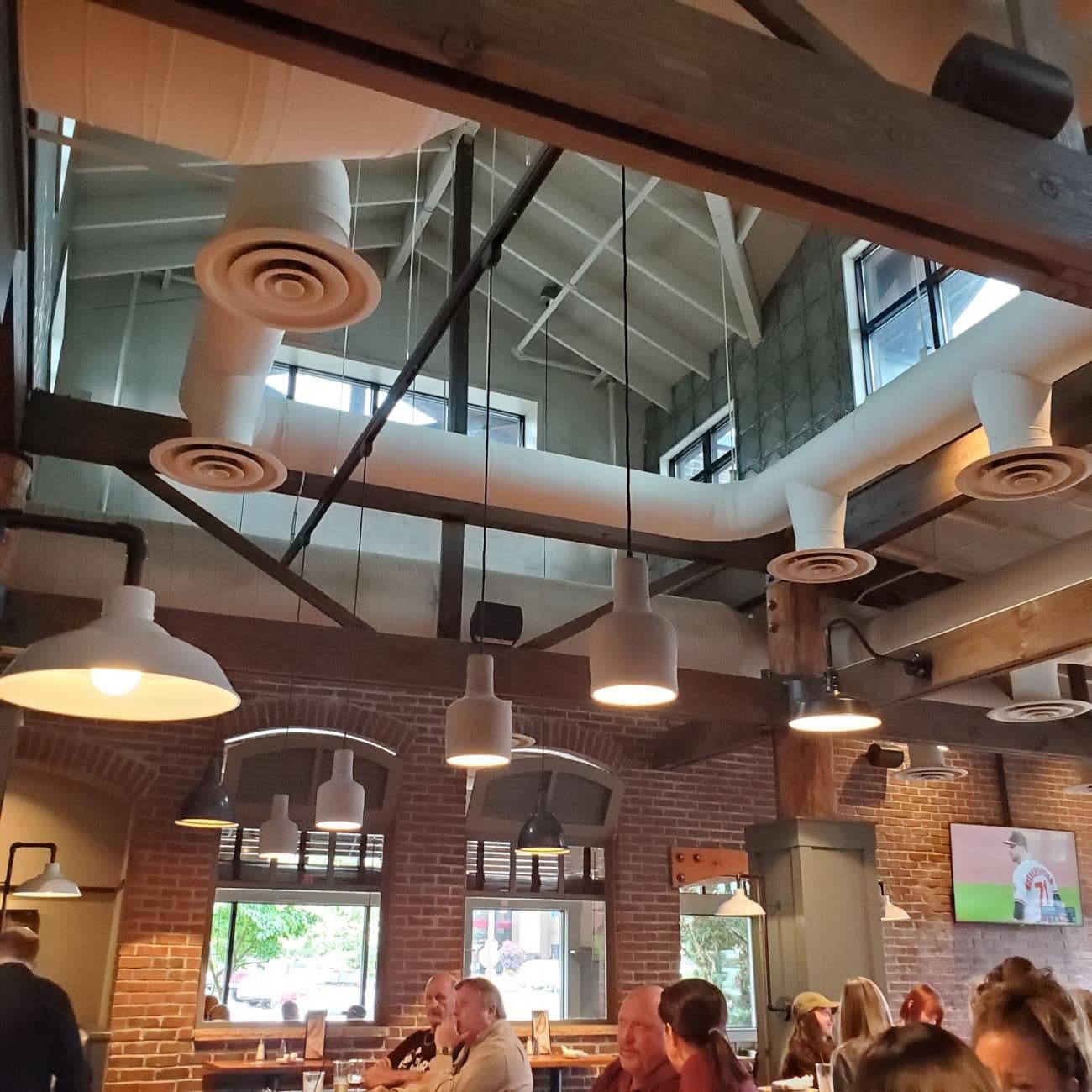
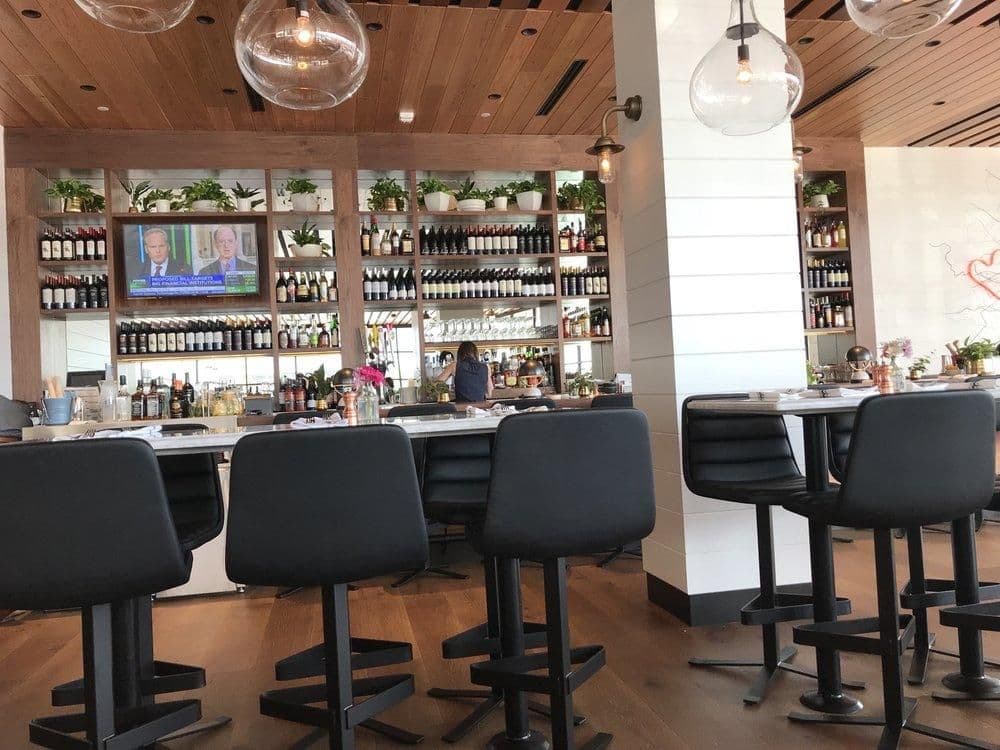
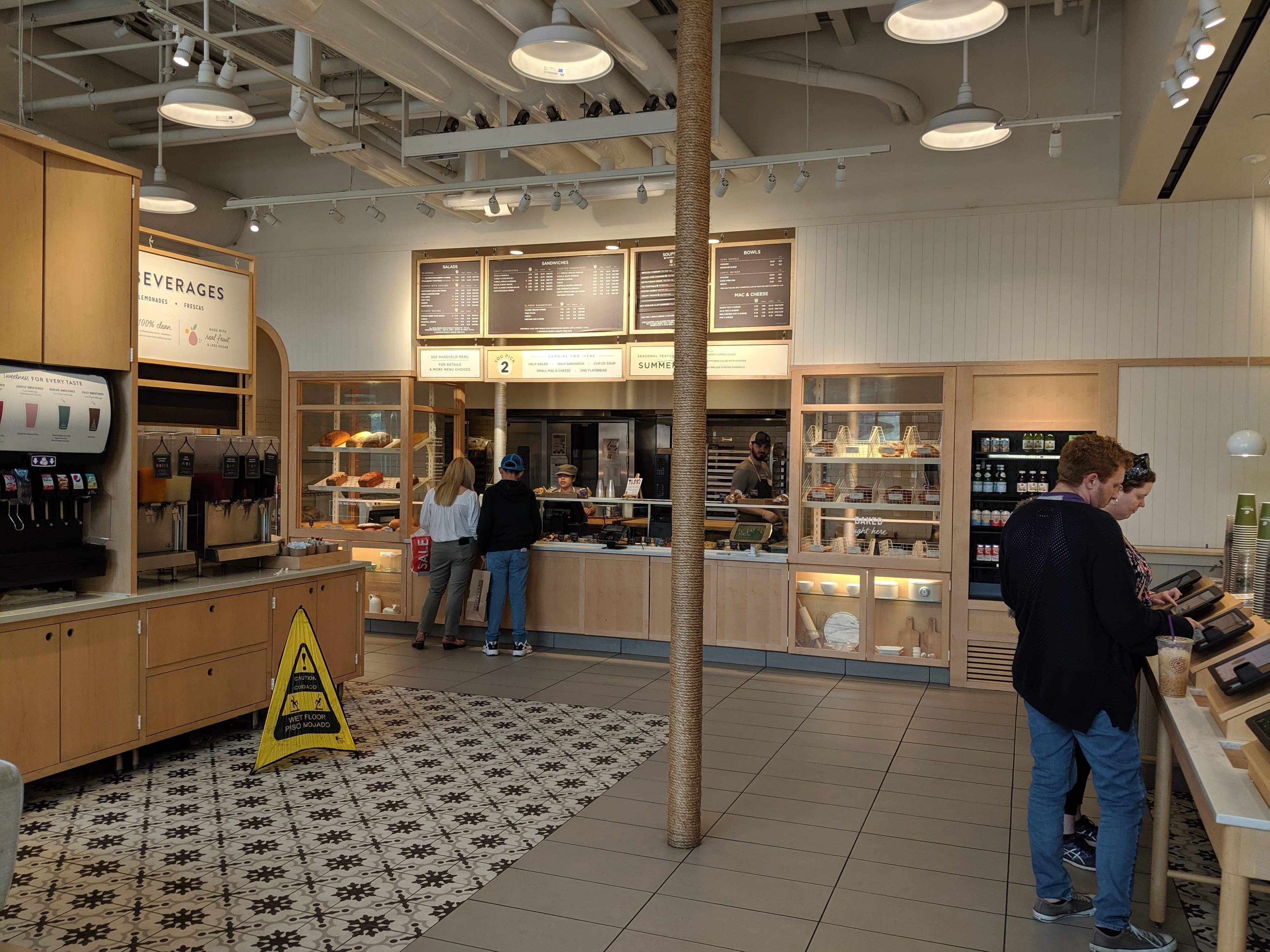
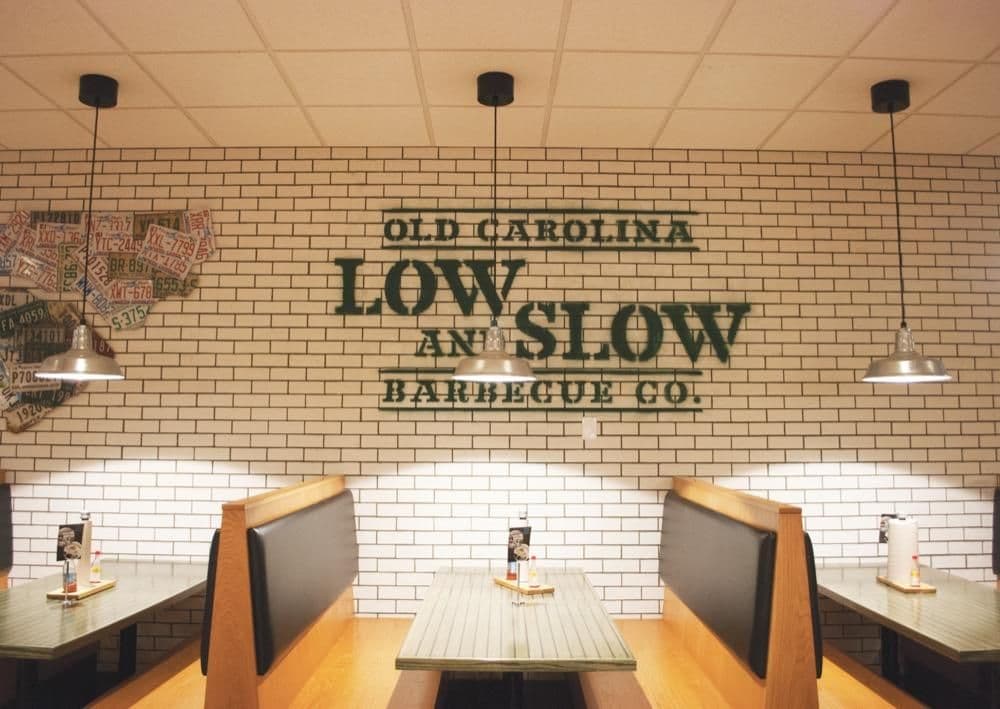
Industrial RLM shades for open ceilings, decorative pendants for the dining room, and wet-listed fixtures for the patio and sign.
Between the parking lot and the table, a guest crosses six or seven lighting zones. Each has its own job.
### Façade and sign
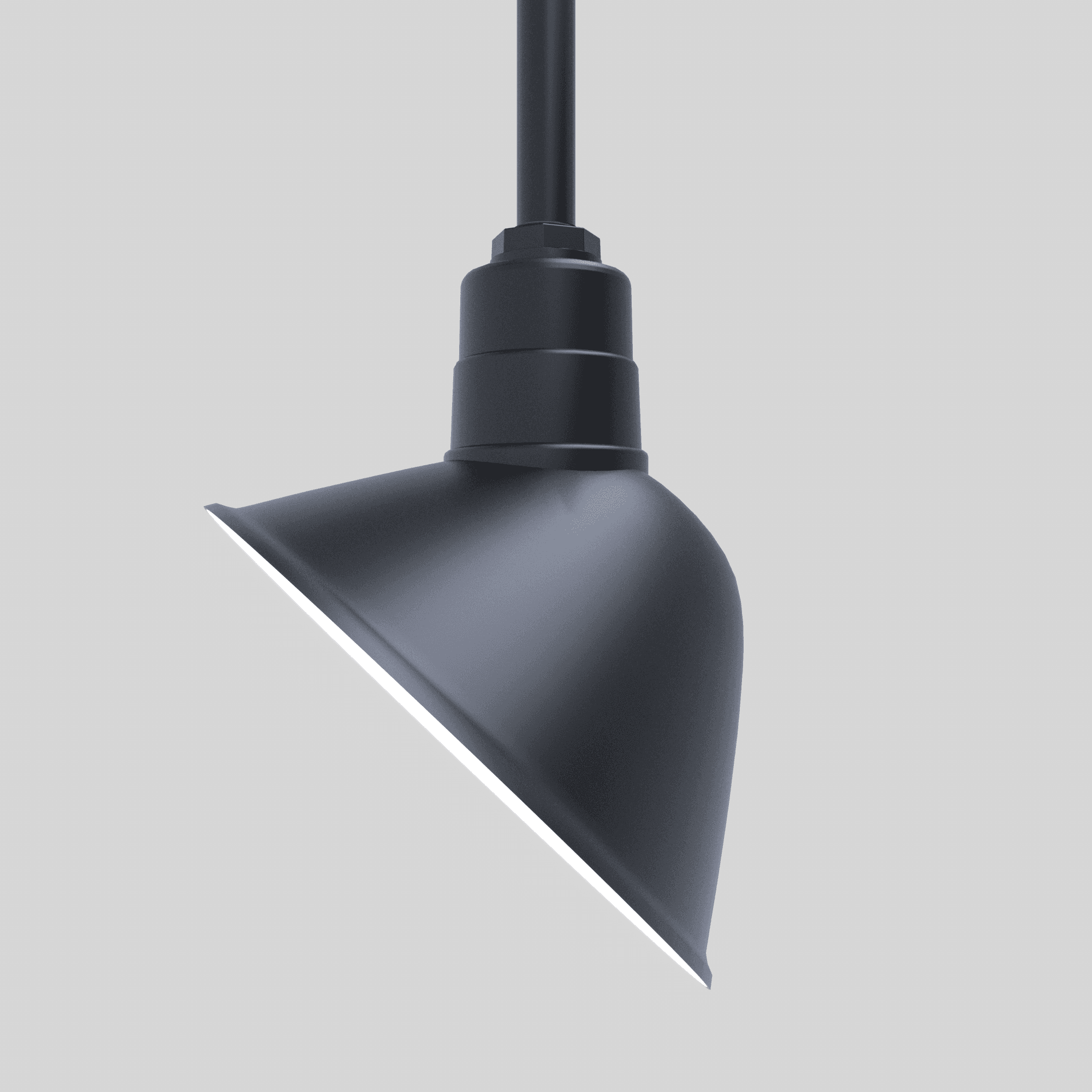
Angled RLMs like the Step Neck Angle aim down onto a painted sign or brick front from a gooseneck arm. Keep them warm (3000K) so the façade matches what guests will see inside.
### Entry and host stand
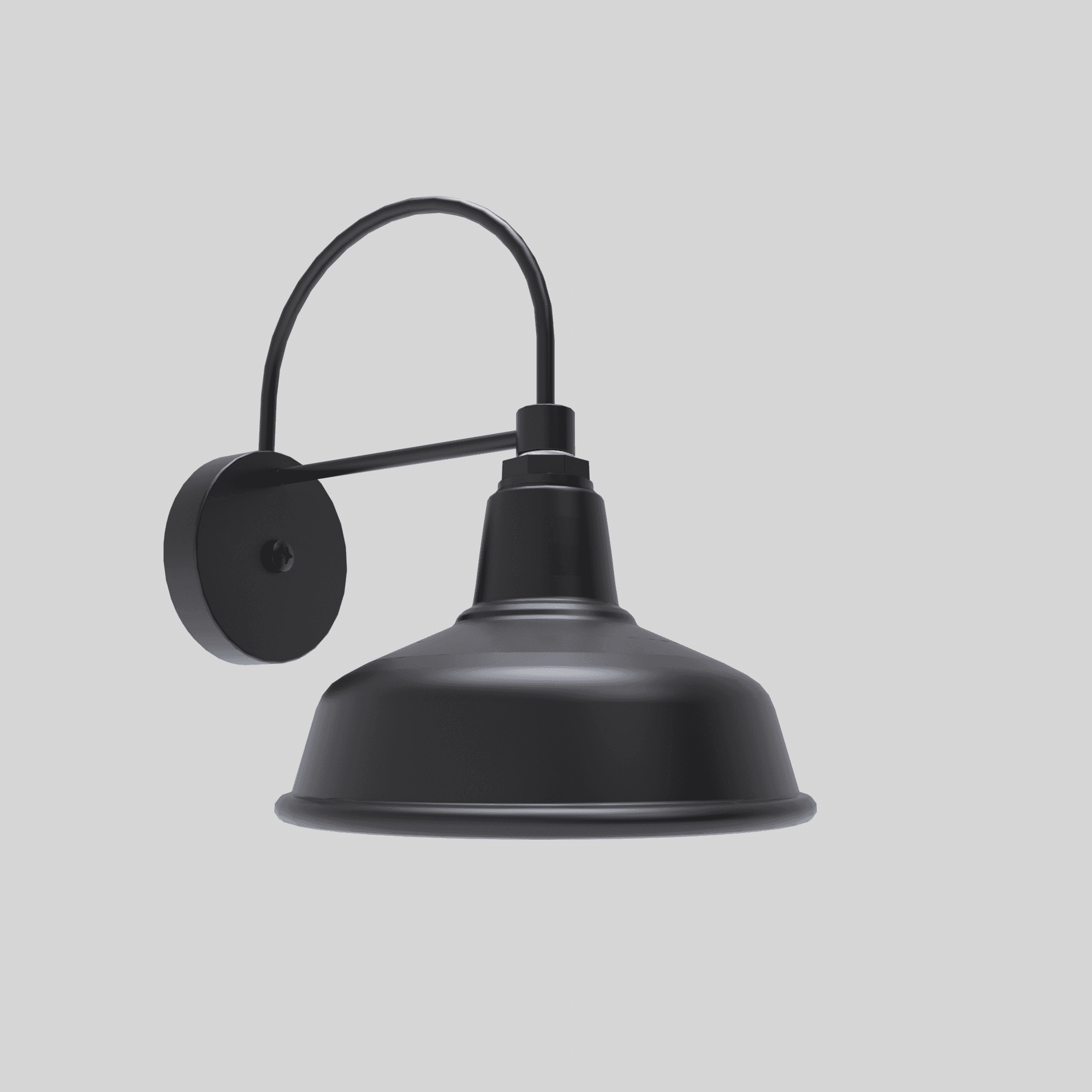
Make this a little brighter than the dining room so arriving guests can read faces and the reservation screen. A pair of Lanterna gooseneck sconces at the door, or one pendant over the stand, marks the threshold.
### Dining room
This is where restaurant dining room lighting earns its keep. Hang one pendant per table or booth, centered on the table rather than the seats, and keep ambient light low so each table reads as its own pool. In open-ceiling rooms, RLM domes on stems carry the scale. In finished rooms, hand-blown glass or acrylic pendants add the character.
### Bar top
Bartenders need enough light to pour and make change, so run the bar a step brighter than the tables, with pendants on 24–30 inch centers over the bar surface.
### Open-kitchen view
If guests can see the line, light it so the view looks clean. A Downlight Reflector with a jelly-jar lens and guard matches the dining-room RLMs and keeps the lamp enclosed.
### Restrooms and corridors
Keep the same color temperature as the dining room, a little brighter at mirrors.
### Patio
Pick wet-location fixtures. The Standard Dome, Step Neck Dome and Lanterna are all cULus listed for wet locations and can carry the dining-room finish outdoors.
| Façade & sign | Step Neck Angle 8–14" on gooseneck · wet listed · 3000K |
|---|---|
| Entry & host stand | Lanterna 10.5" gooseneck sconce or single pendant · 2700–3000K · slightly brighter than dining |
| Dining tables & booths | Step Neck Dome, Beretto, Pianeta with Band or Jug · 28–34" above tabletop · 2700K, dimmed |
| Bar top | Standard Dome 10–14" or Jug cluster · 24–30" centers · 36–42" above bar surface |
| Open-kitchen view | Downlight Reflector with jelly-jar lens and guard · 3000K |
| Restrooms & corridors | Small domes or sconces · same CCT as dining room |
| Patio | Standard Dome, Step Neck Dome or Lanterna · cULus wet location · powder-coat finish |
Des installations réelles — voyez comment ces luminaires s’assemblent sur le terrain.
Most complaints about restaurant lighting are one of four things: cold color, gray-looking food, bad dimming or a bare lamp in a diner's eye. Specify against each.
### Color temperature
Use 2700K in dining rooms and bars and 3000K for façades, patios and open kitchens. Hold one CCT across every fixture in a sight line. A 4000K fixture seen next to a 2700K pendant looks like a mistake. Bock's Adjustable Lumens & Kelvin module lets the installer set CCT and output on site.
### Color rendering
Aim for 90 CRI or better wherever food is served. Reds and browns look flat under low-CRI light.
### Dimming
LED restaurant lighting has to dim smoothly to about 10% without flicker, because the room changes from lunch to late dinner. Confirm the dimming protocol with your electrician before ordering (0–10V or phase dimming) and match the LED module to it. Energy codes such as IECC and Title 24 also require dimming or controls in most commercial spaces.
### Glare over tables
A seated guest's eyes sit about 48 inches off the floor. Hang pendants 28–34 inches above the tabletop, low enough that the shade hides the lamp from someone seated across the room. Deep shades like the Downlight Reflector and the Step Neck Dome cut glare better than shallow ones. With clear-glass pendants like the Jug, use a low-output decorative lamp or pick amber or smoke glass.
### Pendant heights over tables and booths
- Two-top or four-top: one 12–16 inch shade, 28–32 inches above the table.
- Booths: center the pendant over the table, 30–34 inches up, so it clears the tallest guest sliding in.
- Long communal tables: pendants every 30–36 inches, or a larger Beretto every 48–60 inches.
- Keep the shade at least 12 inches narrower than the table.
### Industrial restaurant lighting that holds up
Spun heavy-gauge aluminum and powder coat shrug off kitchen grease and wipe clean. Pick a standard color or a custom powder coat.
### Chain and multi-unit programs
Bock pendants hang in national chains: Step Neck Domes at Panera, Standard Domes at Chili's, Luna at Wendy's, T83 at McDonald's and Roo at Pret. For a prototype or remodel program, one configured part number and color repeats at every location.
Most full-service dining rooms look best at 2700K, which reads as warm and flatters both food and faces. Use 3000K for façades, patios and open kitchens where a little more clarity helps. Keep one color temperature across every fixture a guest can see at once, because mixing 2700K pendants with 4000K downlights makes the room look patched together. Pair the right CCT with 90+ CRI sources so reds and browns on the plate stay rich.
Send us your reflected ceiling plan or a few photos. A Bock rep will suggest fixtures, sizes, heights and finishes for each zone.

Spun-metal RLMs, glass and acrylic pendants, sconces and sign lights, configured and built to order for dining rooms, bars, patios and façades.
Good restaurant lighting is warm, dimmable and layered: low pendants that pool light on each table, softer ambient light in the room, and brighter accents at the bar, the host stand and the sign out front. Pick 2700K to 3000K sources with high color rendering so food looks like food, and shield every lamp from a seated guest's eye.
Picture the room at 7:40 on a Friday. The sign over the brick is lit, the door opens onto a host stand in a warm pool of light, and past it every table glows under its own shade while the edges of the room fall away. Nobody notices the fixtures. They notice that the brisket looks right and their friends look good.
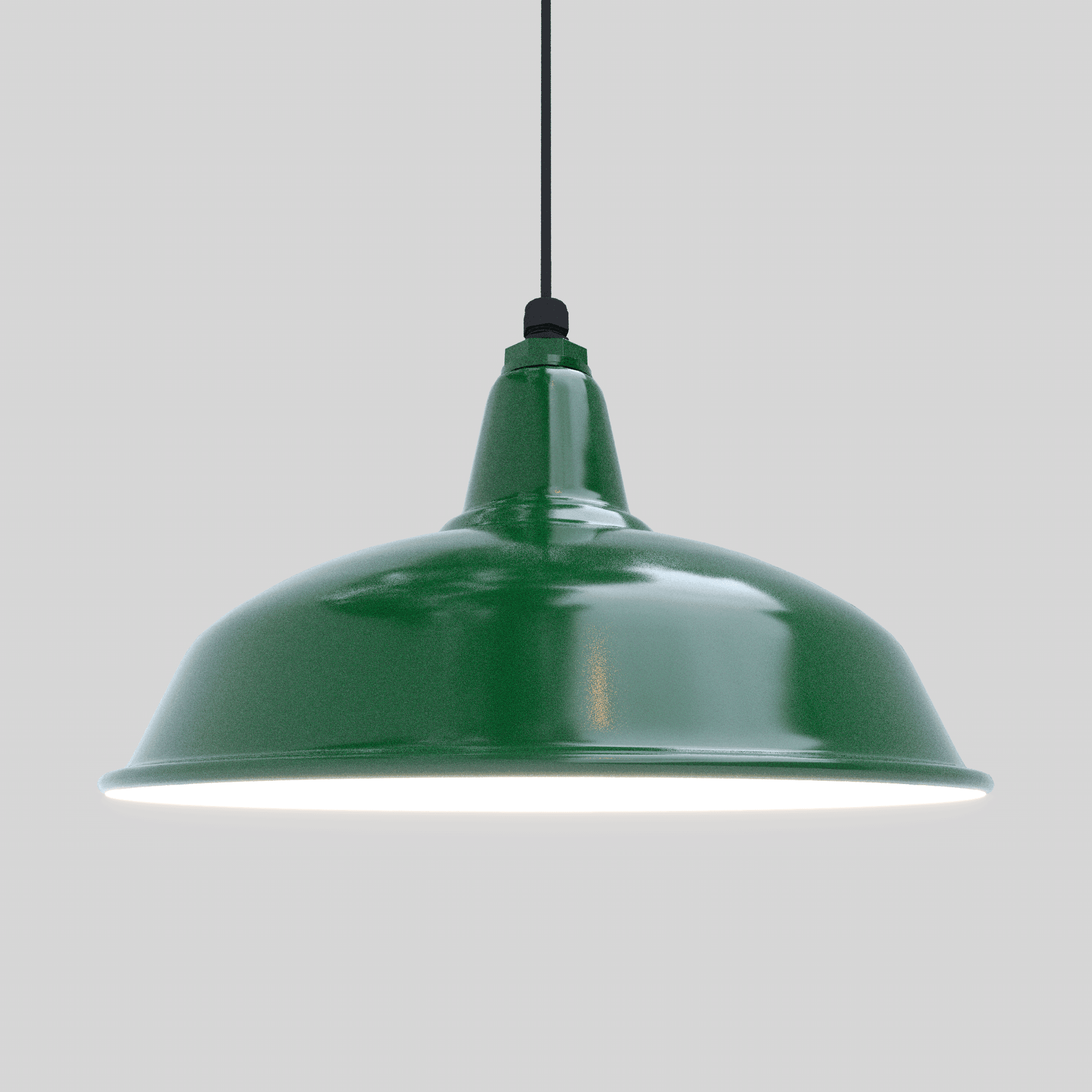
That effect is planned zone by zone. Bock, headquartered in Twinsburg, Ohio, configures and builds restaurant lighting fixtures to order: spun-aluminum RLM shades like the Step Neck Dome and Standard Dome, decorative pendants in hand-blown glass and acrylic, and wet-listed sconces and sign lights for the patio and façade. Each one is configured to order in size, mounting and powder-coat color, so the dining room, the bar and the building outside can share one look.
Industrial RLM shades for open ceilings, decorative pendants for the dining room, and wet-listed fixtures for the patio and sign.
Between the parking lot and the table, a guest crosses six or seven lighting zones. Each has its own job.
### Façade and sign
Angled RLMs like the Step Neck Angle aim down onto a painted sign or brick front from a gooseneck arm. Keep them warm (3000K) so the façade matches what guests will see inside.
### Entry and host stand
Make this a little brighter than the dining room so arriving guests can read faces and the reservation screen. A pair of Lanterna gooseneck sconces at the door, or one pendant over the stand, marks the threshold.
### Dining room
This is where restaurant dining room lighting earns its keep. Hang one pendant per table or booth, centered on the table rather than the seats, and keep ambient light low so each table reads as its own pool. In open-ceiling rooms, RLM domes on stems carry the scale. In finished rooms, hand-blown glass or acrylic pendants add the character.
### Bar top
Bartenders need enough light to pour and make change, so run the bar a step brighter than the tables, with pendants on 24–30 inch centers over the bar surface.
### Open-kitchen view
If guests can see the line, light it so the view looks clean. A Downlight Reflector with a jelly-jar lens and guard matches the dining-room RLMs and keeps the lamp enclosed.
### Restrooms and corridors
Keep the same color temperature as the dining room, a little brighter at mirrors.
### Patio
Pick wet-location fixtures. The Standard Dome, Step Neck Dome and Lanterna are all cULus listed for wet locations and can carry the dining-room finish outdoors.
| Façade & sign | Step Neck Angle 8–14" on gooseneck · wet listed · 3000K |
|---|---|
| Entry & host stand | Lanterna 10.5" gooseneck sconce or single pendant · 2700–3000K · slightly brighter than dining |
| Dining tables & booths | Step Neck Dome, Beretto, Pianeta with Band or Jug · 28–34" above tabletop · 2700K, dimmed |
| Bar top | Standard Dome 10–14" or Jug cluster · 24–30" centers · 36–42" above bar surface |
| Open-kitchen view | Downlight Reflector with jelly-jar lens and guard · 3000K |
| Restrooms & corridors | Small domes or sconces · same CCT as dining room |
| Patio | Standard Dome, Step Neck Dome or Lanterna · cULus wet location · powder-coat finish |
Des installations réelles — voyez comment ces luminaires s’assemblent sur le terrain.
Most complaints about restaurant lighting are one of four things: cold color, gray-looking food, bad dimming or a bare lamp in a diner's eye. Specify against each.
### Color temperature
Use 2700K in dining rooms and bars and 3000K for façades, patios and open kitchens. Hold one CCT across every fixture in a sight line. A 4000K fixture seen next to a 2700K pendant looks like a mistake. Bock's Adjustable Lumens & Kelvin module lets the installer set CCT and output on site.
### Color rendering
Aim for 90 CRI or better wherever food is served. Reds and browns look flat under low-CRI light.
### Dimming
LED restaurant lighting has to dim smoothly to about 10% without flicker, because the room changes from lunch to late dinner. Confirm the dimming protocol with your electrician before ordering (0–10V or phase dimming) and match the LED module to it. Energy codes such as IECC and Title 24 also require dimming or controls in most commercial spaces.
### Glare over tables
A seated guest's eyes sit about 48 inches off the floor. Hang pendants 28–34 inches above the tabletop, low enough that the shade hides the lamp from someone seated across the room. Deep shades like the Downlight Reflector and the Step Neck Dome cut glare better than shallow ones. With clear-glass pendants like the Jug, use a low-output decorative lamp or pick amber or smoke glass.
### Pendant heights over tables and booths
- Two-top or four-top: one 12–16 inch shade, 28–32 inches above the table.
- Booths: center the pendant over the table, 30–34 inches up, so it clears the tallest guest sliding in.
- Long communal tables: pendants every 30–36 inches, or a larger Beretto every 48–60 inches.
- Keep the shade at least 12 inches narrower than the table.
### Industrial restaurant lighting that holds up
Spun heavy-gauge aluminum and powder coat shrug off kitchen grease and wipe clean. Pick a standard color or a custom powder coat.
### Chain and multi-unit programs
Bock pendants hang in national chains: Step Neck Domes at Panera, Standard Domes at Chili's, Luna at Wendy's, T83 at McDonald's and Roo at Pret. For a prototype or remodel program, one configured part number and color repeats at every location.
Most full-service dining rooms look best at 2700K, which reads as warm and flatters both food and faces. Use 3000K for façades, patios and open kitchens where a little more clarity helps. Keep one color temperature across every fixture a guest can see at once, because mixing 2700K pendants with 4000K downlights makes the room look patched together. Pair the right CCT with 90+ CRI sources so reds and browns on the plate stay rich.
Send us your reflected ceiling plan or a few photos. A Bock rep will suggest fixtures, sizes, heights and finishes for each zone.