Lighting Requirements in Flanagan, Illinois
Lighting Regulations in Flanagan, Illinois: Preserving Rural Charm Through Minimal Lighting Oversight
Introduction
Nestled in the heart of Livingston County, the village of Flanagan, Illinois embodies the quintessential small-town American experience. Founded in 1856 by Irish immigrant Matthew Flanagan, this charming community has maintained its rural character and peaceful atmosphere for over 160 years.
With a population of just 1,100 residents (as of the 2010 census) spread across a modest 0.53 square miles, Flanagan's approach to community planning—including lighting regulations—reflects its commitment to preserving its serene, unhurried lifestyle.
Unlike larger municipalities with extensive lighting codes, Flanagan maintains a surprisingly minimal regulatory approach to lighting. This simplicity aligns with the village's overall character and small-town governance style.
Quick Reference Guide to Flanagan's Lighting Regulations
Based on our comprehensive review of Flanagan's municipal code, the village maintains only one specific lighting regulation:
• Establishments selling liquor for on-premises consumption must be continuously lighted during business hours • Lighting can be provided by either natural light or artificial white light • All parts of the interior premises must be clearly visible • No specific technical specifications (such as CRI values, lumens, or footcandles) are stipulated

Understanding Flanagan's Limited Lighting Regulations
The Rural Context
Flanagan's approach to lighting regulation reflects its rural identity and small-town values. In communities of this size, lighting is often regulated only where necessary for public safety, with fewer concerns about light pollution compared to urban areas.
Focus on Safety in Public Establishments
The village's sole codified lighting requirement focuses on establishments serving alcohol. This safety-oriented regulation ensures proper visibility within these businesses, reflecting common practice across many municipalities where adequate lighting is considered essential for maintaining order and security in such venues.
The Absence of Extensive Regulations
The lack of comprehensive lighting regulations in Flanagan likely stems from several factors:
• The village's small geographic footprint • Low population density • Limited commercial development • Rural setting with naturally darker skies • Community self-regulation based on shared values
What Property Owners Should Know
Commercial Properties
If you operate a business that serves alcohol for on-premises consumption, you should ensure:
• Your establishment is well-lit throughout business hours • You utilize either natural daylight or artificial white lighting • All interior areas remain clearly visible • No dark corners or inadequately illuminated sections exist
Residential Properties
While Flanagan doesn't specify residential lighting requirements in its municipal code, property owners might consider:
• Being mindful of neighbors when installing outdoor lighting • Directing exterior lights downward to minimize light trespass • Considering the village's rural character when selecting outdoor fixtures • Following general best practices for energy efficiency
New Construction Considerations
Though specific regulations aren't codified, new construction projects in Flanagan would benefit from:
• Consulting with village officials early in the planning process • Considering the community's rural aesthetic when designing lighting • Implementing lighting that enhances safety without creating glare • Respecting the village's quiet, unhurried atmosphere
.jpg&w=3840&q=75)
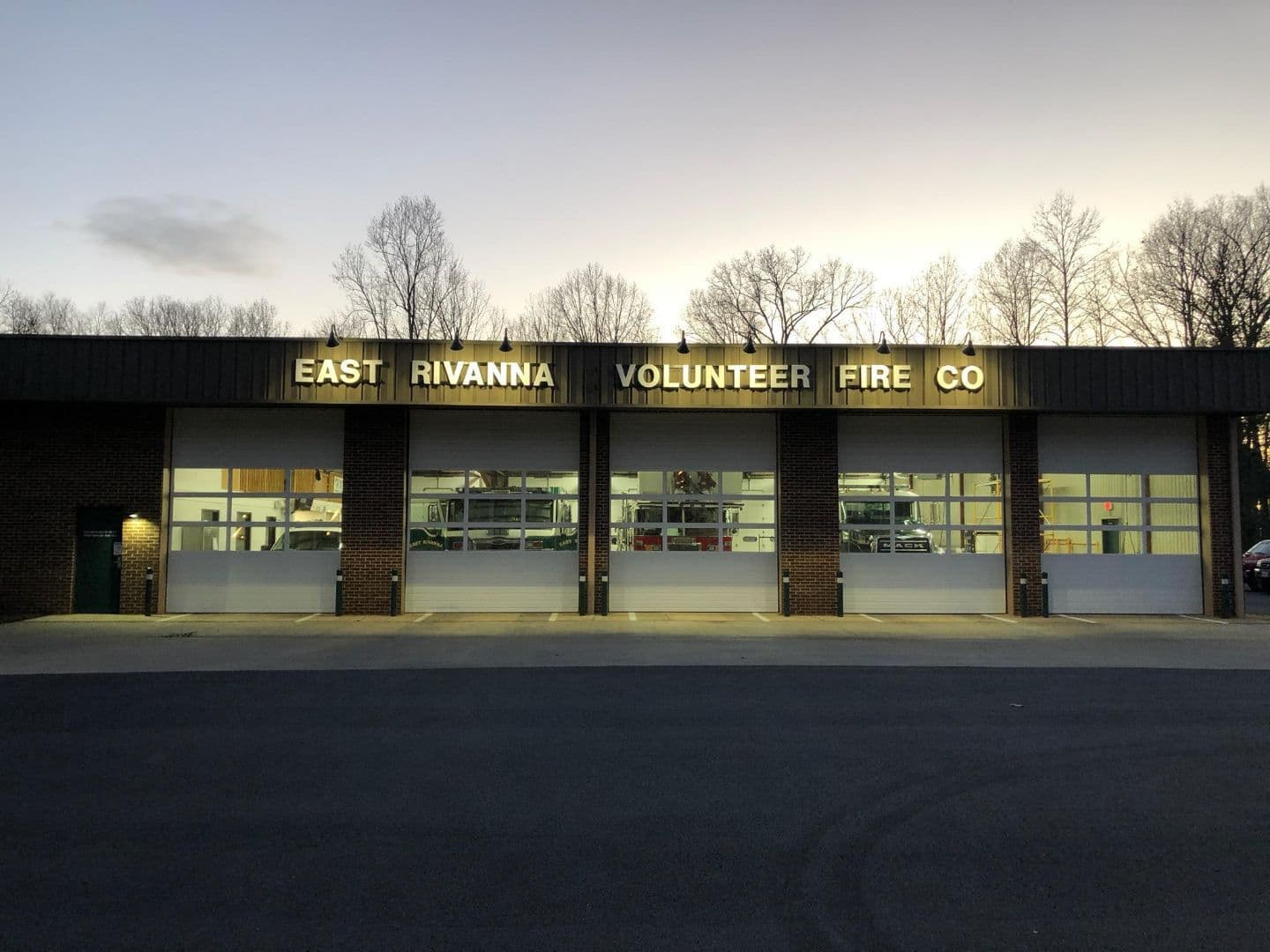
East Rivanna Volunteer Fire Co.
Keswick, Virginia
Supporting Flanagan's Community Character
Bock Lighting's Commitment to Small-Town Values
As a manufacturer with roots dating back to 1918, Bock Lighting understands the unique character and lighting needs of small communities like Flanagan. We appreciate the balance between modern lighting needs and preserving the charm of rural communities.
Respecting Community Identity
Flanagan's minimal approach to lighting regulation speaks to its trust in community standards and shared values. This approach aligns with our belief that lighting should enhance rather than detract from a community's distinct character.
Educational Resources for Rural Communities
We're committed to serving as an educational resource for property owners in communities like Flanagan, helping them understand how thoughtful lighting choices can preserve rural character while meeting safety and functional needs.
Supporting Historical Continuity
With Flanagan's rich history dating back to 1856, we understand the importance of lighting solutions that complement historical contexts while providing modern functionality—striking a balance that preserves community identity for future generations.
Best Practices for Lighting in Small Rural Communities
Although Flanagan has minimal formal lighting regulations, property owners can follow these general best practices:
Consider Dark Sky Principles
• Direct outdoor lighting downward • Use fixtures that minimize light pollution • Choose warm-temperature bulbs when possible • Install timers or motion sensors to reduce unnecessary illumination
Balance Safety and Aesthetics
• Ensure pathways and entrances are adequately lit • Avoid harsh, glaring lights that detract from rural charm • Consider the visual impact of lighting on neighboring properties • Implement lighting that enhances rather than dominates architectural features
Energy Efficiency
• Select LED lighting where practical • Install timers and sensors to reduce energy consumption • Consider solar-powered options for exterior lighting • Choose appropriately sized fixtures for the area being illuminated

Conclusion
Flanagan, Illinois exemplifies how small rural communities often take a measured approach to lighting regulation, focusing only on areas of specific concern—in this case, establishments serving alcohol. This minimal regulatory framework reflects the village's trust in community standards and shared values.
While property owners have significant freedom regarding lighting choices, the village's commitment to maintaining its serene, rural character suggests a community where residents naturally consider how their lighting impacts neighbors and the overall atmosphere of their historic village.
For specific questions about lighting requirements for your property, contacting village officials directly remains the best course of action, as they can provide guidance tailored to your particular situation and location within Flanagan.