Lighting Requirements in Bellevue, Ohio
Lighting Regulations in Bellevue, Ohio: Maintaining Historic Character While Ensuring Safety and Functionality
Introduction
Bellevue, Ohio, founded in 1815 by Mark Hopkins and his fellow settlers, has evolved from its early days as a thriving railroad town into a community that values both its rich historical heritage and modern development needs. Spanning across four counties—Huron, Erie, Sandusky, and Seneca—Bellevue's architectural character reflects its 19th-century railroad boom and subsequent growth.
With landmarks like the Tremont House (built in 1846) and the unique collections of the Post Mark Collectors Club, Bellevue demonstrates a strong commitment to preserving its past. This same dedication to balancing historical preservation with contemporary needs is evident in the city's approach to lighting regulations.
Quick Reference Guide: Key Lighting Requirements
For those seeking a quick overview, here are Bellevue's essential lighting requirements:
- Construction Sites: Warning lights required at night for all construction sites, excavations, or similar hazards
- Industrial Park Address Signs: Must be illuminated (internally or externally) for 24-hour visibility
- Parking Areas: All lighting must have suitable shielding to prevent glare at eye level
- Home Occupations: No exterior illumination beyond what's typical for residential areas
- Industrial Areas: Lighting must be screened with landscaping and existing woodlands
- Street Lighting: Required for new developments with costs shared between developers and the city

Construction Site Safety Lighting
Protecting Public Safety
Construction sites, excavations, wells, cesspools, and structures under construction or repair must be adequately protected not only with barricades but also with warning lights at night. This requirement ensures these areas don't pose dangers to life or limb.
Warning Light Protection
The regulations explicitly prohibit the destruction, removal, damage, or extinguishing of any barricade or warning light placed for public protection. This underscores the importance of maintaining these safety features throughout construction projects.
Compliance Responsibility
Property owners and contractors share responsibility for ensuring proper lighting of potential hazards. This aligns with Bellevue's commitment to public safety while accommodating necessary development and construction.
Street Lighting Requirements for New Developments
Developer Responsibilities
For new developments, street lighting isn't optional—it's listed among required improvements. The process for implementation includes:
- Developers must submit a written request for street lights to the Safety-Service Director
- Requests should specify the area to be lit and any special requirements
- Developers must provide necessary trenching for installation at their expense
Cost-Sharing Structure
Bellevue has established a practical cost-sharing approach:
- The Electric Company provides specifications, engineering, and cost statements
- The City splits costs with developers for lights installed to Electric Company specifications
- City contribution is capped at $450 per light
- Any additional lights beyond specifications are at developer's sole expense
Special Situations and Variations
Any special lighting situations or proposed deviations from standard requirements must be referred to the Planning Commission for review and decision, ensuring oversight while allowing flexibility.
.jpg&w=3840&q=75&dpl=dpl_87jr9wPPDTxFknoCx3BuR7xdLkEg)
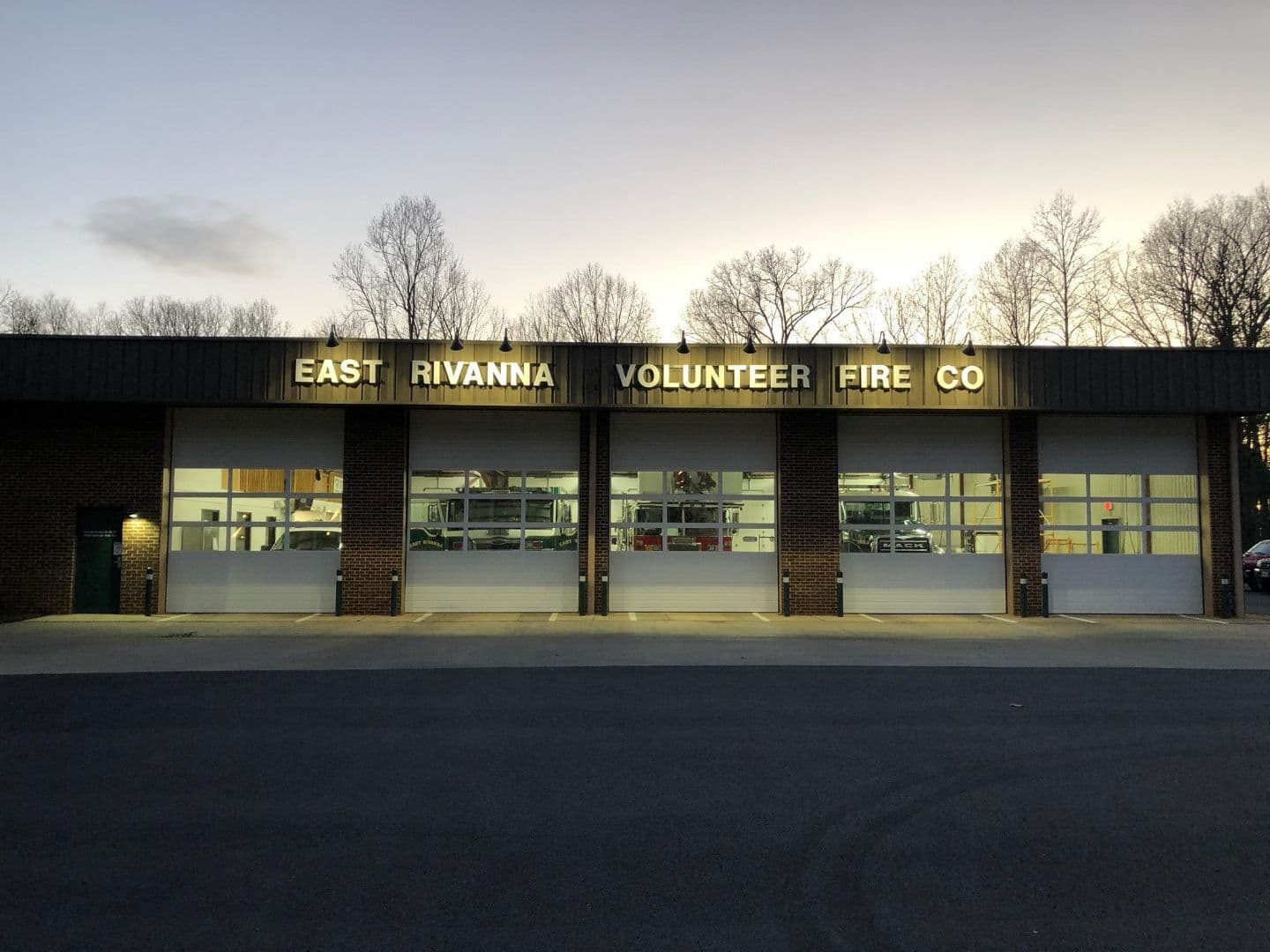
East Rivanna Volunteer Fire Co.
Keswick, Virginia
Industrial Park Lighting Requirements
Address Illumination Standards
Industrial parks—defined as subdivisions containing more than one industrial principal building—have specific address illumination requirements:
- Address numbers must be posted conspicuously on building fronts
- Numbers must be between 1-2 feet high
- Numbers must be illuminated (either internally or externally)
- Illumination must ensure visibility both day and night
Retroactive Application
This regulation doesn't just apply to new construction. It's retroactive for all existing buildings, with a 30-day notice period to achieve compliance, demonstrating Bellevue's commitment to consistent standards across all industrial properties.
Parking Area Lighting Controls
Glare Prevention Requirements
Bellevue's code specifically addresses lighting used for off-street parking and loading areas:
- All such lighting must be equipped with suitable shielding
- Alternatively, it must be designed to prevent glare at eye level
- Protection extends to surrounding public property, private property, and streets
Design Considerations
When designing parking area lighting, property owners must ensure that light doesn't adversely impact surrounding properties. This reflects Bellevue's balanced approach to providing necessary illumination while respecting neighboring properties.

Business and Home Occupation Lighting Restrictions
Commercial Impact Limitations
Business activities, particularly home occupations, face specific lighting limitations:
- No equipment or process may create glare detectable to normal human senses from adjacent property
- Home occupations cannot include exterior illumination beyond what's customarily found in residential areas
Industrial Area Requirements
Industrial uses must be developed in "park-like" surroundings, utilizing:
- Landscaping as buffers to screen lighting
- Existing woodlands to mitigate light impact
- Design approaches that minimize visual disruption
Site Plan Requirements for Lighting
Documentation Standards
Development proposals requiring site plan review must include detailed lighting information:
- Location of existing and proposed exterior lighting locations and poles
- Areas of illumination clearly illustrated
- Type of fixtures to be used
- Demonstration of compliance with applicable zoning standards
Landscape Plan Integration
A separate, detailed Landscape Plan must include all existing and proposed light standards, ensuring comprehensive review of how lighting integrates with the overall site design.


What Property Owners Should Know
Compliance Benefits
Understanding and following Bellevue's lighting regulations offers several advantages:
- Enhanced Safety: Proper lighting prevents accidents and improves security
- Good Neighbor Relations: Preventing light trespass and glare maintains harmony
- Historical Integrity: Appropriate lighting preserves Bellevue's historic character
- Streamlined Approvals: Compliance speeds up permit processes
Planning for New Construction
When planning new construction or modifications:
- Include lighting details in your initial planning phases
- Consider both functional requirements and aesthetic impact
- Consult with planning officials early if you have questions
- Remember that lighting must be shown on both site and landscape plans
Supporting Bellevue's Lighting Vision
Bock Lighting, with roots in Northeast Ohio dating back to 1918, shares Bellevue's commitment to preserving historical character while embracing practical lighting solutions. We understand the unique challenges of balancing safety, functionality, and aesthetic preservation in communities like Bellevue that cherish their railroad town heritage.
Our appreciation for Bellevue's architectural history informs our approach to lighting solutions that respect the city's character. As a regional manufacturer, we understand how proper lighting can enhance historical areas rather than detract from them.
Bock Lighting serves as an educational resource for understanding lighting regulations, helping property owners navigate compliance while honoring Bellevue's distinctive character. Our commitment to sustainable and responsible lighting practices aligns with Bellevue's vision for thoughtful development that respects both history and contemporary needs.
Conclusion
Bellevue's lighting regulations reflect its broader commitment to maintaining its historical character while ensuring safety and functionality. From construction site warning lights to industrial park address illumination, these standards help create a community where lighting enhances rather than detracts from the city's unique charm.
By understanding and following these regulations, property owners and businesses contribute to the preservation of Bellevue's architectural heritage while meeting modern needs. This balanced approach helps ensure that Bellevue continues to shine as a community that honors its past while thoughtfully embracing its future.