Requisitos de Iluminación en Danville, Illinois
Lighting Regulations in Danville, Illinois: A Comprehensive Guide to Property Illumination Standards
Introduction
Nestled in Vermilion County, Danville, Illinois carries a rich historical heritage dating back to its founding in 1827. Named after Indian trader Dan Beckwith, the city rapidly developed as a coal mining and manufacturing hub thanks to its strategic location. Today, Danville balances preserving its architectural heritage with meeting modern development needs.
Lighting plays a crucial role in this balance, enhancing safety while respecting historical character. The city's lighting regulations reflect its community values and commitment to maintaining quality of life for its approximately 32,000 residents across its 50 square miles.
Quick Reference Guide: Key Lighting Requirements
Property and Exterior Lighting:
- Light Direction: Must be arranged to direct light away from adjoining properties and passing motorists
- Residential Proximity: Fixtures within 50 feet of residential zoning districts require total light cutoff at angles less than 90 degrees
- Light Spillover: Maximum one foot candle allowed at any property line
- Prohibited Lighting: Flickering lights, laser lights, and holograms
Sign Illumination:
- Animated/flashing signs require automatic dimming during nighttime
- Externally lit signs must use steady, down-directed, shielded light sources
- Special height and placement requirements for illuminated signs near intersections
Parking Areas:
- Lighting required for lots with more than 10 spaces
- Must operate from dusk until dawn or until business closes
- Specific fixture counts based on parking lot size
Understanding Light Cutoff Requirements
What is Light Cutoff?
Light cutoff refers to how a lighting fixture controls the direction of light. Danville's regulations specify different requirements based on fixture design:
No Cutoff or Total Cutoff >90 Degrees:
- 10 feet maximum height in residential zones
- 15 feet maximum in B-1, B-4, and P-1 zones
- 20 feet maximum in B-2, B-3, I-1, and I-2 zones
Total Cutoff ≤90 Degrees:
- 15 feet maximum height in residential zones
- 20 feet maximum in B-1, B-4, and P-1 zones
- 30 feet maximum in B-2, B-3, I-1, and I-2 zones
Residential Protection Measures
When lighting fixtures are within 50 feet of a residential zoning district, they must:
- Have total cutoff of light at an angle less than 90 degrees
- Be positioned so the bare light bulb/lamp is completely shielded from direct view at 5 feet above ground
- Face away from residential property
This ensures residential areas aren't negatively affected by commercial or industrial lighting.
Parking Lot Illumination Standards
Fixture Requirements
Danville's code includes specific requirements for parking lot lighting based on lot size:
- 10-49 parking spaces: At least one freestanding lighting fixture for every 10 spaces
- 50+ parking spaces: Must submit a comprehensive lighting plan demonstrating adequate illumination according to I.E.S. illuminance level guidelines
Operation and Maintenance
Property owners must ensure:
- Lights operate from dusk until dawn or until business closes
- All lights remain in working order
- Regular maintenance of lighting systems
Sign Illumination Regulations
Permissible Sign Lighting
Permanent signs in Danville may be:
- Non-illuminated
- Internally illuminated
- Internally indirect illuminated
- Externally indirect illuminated
Special Requirements for Animated/Flashing Signs
Animated or flashing signs must:
- Be equipped with light sensing devices or scheduled dimming timers
- Not project into public right-of-way
- Not exceed 50 square feet if within 50 feet of public right-of-way
- Be at least 20 feet above grade if within 50 feet of public street right-of-way
- Not emit only red or green color if within 150 feet of traffic signal controlled intersection
Shielding Requirements for Sign Lighting
External lighting for signs must be:
- Steady and stationary
- Down-directed
- Shielded to focus light onto the sign
- Additionally shielded if within 10 feet of residential areas or public right-of-way
Specialized Lighting Situations
Mobile Home Parks
Mobile home parks in Danville require:
- Adequate nighttime lighting for all roads within the park
- Adequate lighting for all walkways
- A comprehensive electric lighting plan as part of park development approval
Wind Energy Systems
Wind energy systems have unique lighting requirements:
- No lights permitted unless required by FAA regulations
- Systems exceeding 100 feet in height must have general aviation obstruction beacons on top of the rotor
Alcohol Sales Venues
Establishments serving alcohol for on-premises consumption must:
- Maintain continuous lighting during business hours
- Ensure all parts of interior spaces are clearly visible
- Not use lighting arrangements that obstruct interior views
- Submit lighting plans and fixture details if requested by the liquor commissioner
Exemptions and Prohibitions
Exempt Lighting
The following are exempt from Danville's standard lighting regulations:
- Ball diamonds, tennis courts, and other recreational playing fields
- Street lights and traffic control fixtures on utility poles
Prohibited Lighting
The following lighting is prohibited in all zoning districts:
- Flickering or flashing lights (except where specifically permitted for signs)
- Laser lights or holograms
- Signs mimicking traffic safety or municipal warning lights
What Property Owners Should Know
Compliance Essentials
When planning lighting for your property in Danville, remember:
- Good Neighbor Principle: Direct light away from neighboring properties
- Maintenance Requirements: Keep all lighting in good repair
- Documentation: Include lighting plans in site development applications
- Zoning Awareness: Different zones have different height and fixture requirements
When Permits Are Required
Lighting changes may require permits, particularly when:
- Making significant alterations to existing lighting systems
- Installing new lighting as part of development projects
- Changing illumination of signs (specifically noted for St. Paul Roman Catholic Church)
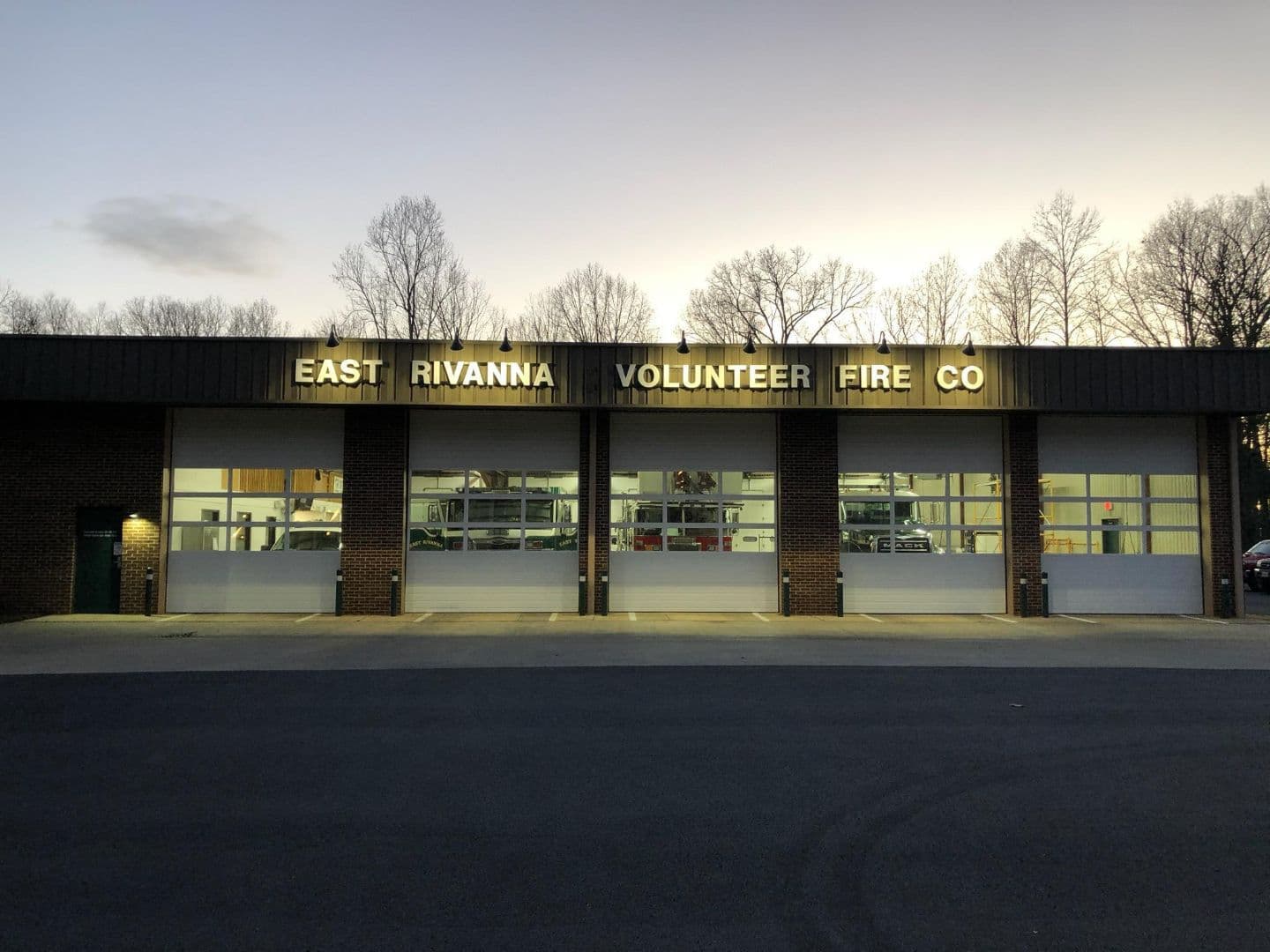
East Rivanna Volunteer Fire Co.
Keswick, Virginia
.jpg&w=3840&q=75)
Supporting Danville's Lighting Vision
Bock Lighting, with roots dating back to 1918, understands the balance Danville strikes between historical preservation and modern functionality. As a Northeast Ohio manufacturer, we appreciate communities that value their architectural heritage while addressing contemporary safety needs.
Our experience with regional architectural styles helps us understand Danville's unique character. While the city experienced rapid growth as a coal mining and rail hub in the early 20th century, it has maintained significant historical districts that deserve thoughtful illumination that complies with local regulations.
We believe in helping communities preserve their distinctive character through appropriate lighting solutions. Our team stays informed about local regulations to serve as an educational resource for property owners navigating lighting compliance, particularly in historically significant areas.
Bock's commitment to sustainability and responsible lighting practices aligns with Danville's community values of safety and collaboration, as seen in their various public safety initiatives.
Conclusion
Danville's lighting regulations reflect the city's commitment to safety, historical preservation, and community well-being. By establishing clear standards for light direction, cutoff, fixture heights, and illumination levels, these regulations help maintain the quality of life for residents while accommodating business and development needs.
Property owners should work closely with lighting professionals who understand these regulations to ensure compliance while achieving their illumination goals. With thoughtful planning and implementation, lighting can enhance Danville's historical character while providing the functionality needed for a vibrant, safe community.
Remember that lighting regulations may be updated periodically, so it's always advisable to check with Danville's planning department for the most current requirements before undertaking any significant lighting project.