Lighting Requirements in Linndale, Ohio
Lighting Regulations in Linndale, Ohio: Understanding Limited Requirements in a Small Village
Introduction
Nestled within Cuyahoga County, the small village of Linndale, Ohio has a unique history dating back to its incorporation in 1902. With approximately 179 residents, Linndale is one of the smallest municipalities in the region. The village was originally established to maintain local control and avoid annexation by neighboring Cleveland – a commitment to autonomy that continues to influence its governance today.
When it comes to lighting regulations, Linndale maintains a notably minimalist approach compared to many other municipalities. This reflects both its small size and its practical governance focus on addressing the specific needs of its tight-knit community.
Quick Reference Guide
Based on our review of Linndale's building code, the village has extremely limited specific lighting regulations:
- Construction Safety: Warning lights required at night for excavations and construction sites
- Impact on Neighbors: Properties must be designed to avoid unreasonable light impact on surrounding properties
- Residential Permits: $2 permit fee per lighting fixture for residential installations
- No Comprehensive Lighting Code: Unlike larger municipalities, Linndale does not appear to have detailed technical lighting specifications
Construction and Safety Lighting
Warning Lights for Public Safety
One of the few explicit lighting requirements in Linndale pertains to construction sites and potential hazards:
"No person shall abandon or knowingly permit to remain on public or private property, any excavation, well, cesspool or structure which is in the process of construction, reconstruction, repair or alteration unless the same is adequately protected by suitable barricades and guarded by warning devices or lights at night so that the condition will not reasonably prove dangerous to life or limb."
"No person shall abandon or knowingly permit to remain on public or private property, any excavation, well, cesspool or structure which is in the process of construction, reconstruction, repair or alteration unless the same is adequately protected by suitable barricades and guarded by warning devices or lights at night so that the condition will not reasonably prove dangerous to life or limb."
Protection of Safety Lighting
The village code also prohibits tampering with safety lighting:
"No person shall destroy, remove, damage or extinguish any barricade or warning light that is placed for the protection of the public so as to prevent injury to life or limb."
"No person shall destroy, remove, damage or extinguish any barricade or warning light that is placed for the protection of the public so as to prevent injury to life or limb."
These regulations emphasize Linndale's focus on basic safety rather than aesthetic or technical lighting standards.
Neighborhood Consideration Requirements
Preventing Light Nuisance
While lacking specific technical requirements, Linndale's code does include a general principle regarding light impact:
- Properties must be "designed and operated so as not to unreasonably impact upon surrounding property in terms of 'light'"
This broad guideline gives the village flexibility in addressing potential lighting issues that might affect neighbors while avoiding overly prescriptive requirements.
What This Means for Property Owners
Without detailed specifications, property owners should:
- Use common sense when installing exterior lighting
- Consider how your lighting might affect neighboring properties
- Avoid excessively bright or poorly aimed fixtures that could create nuisance
- Focus lighting on your own property rather than allowing significant light trespass
.jpg&w=3840&q=75)
.jpg&w=3840&q=75)
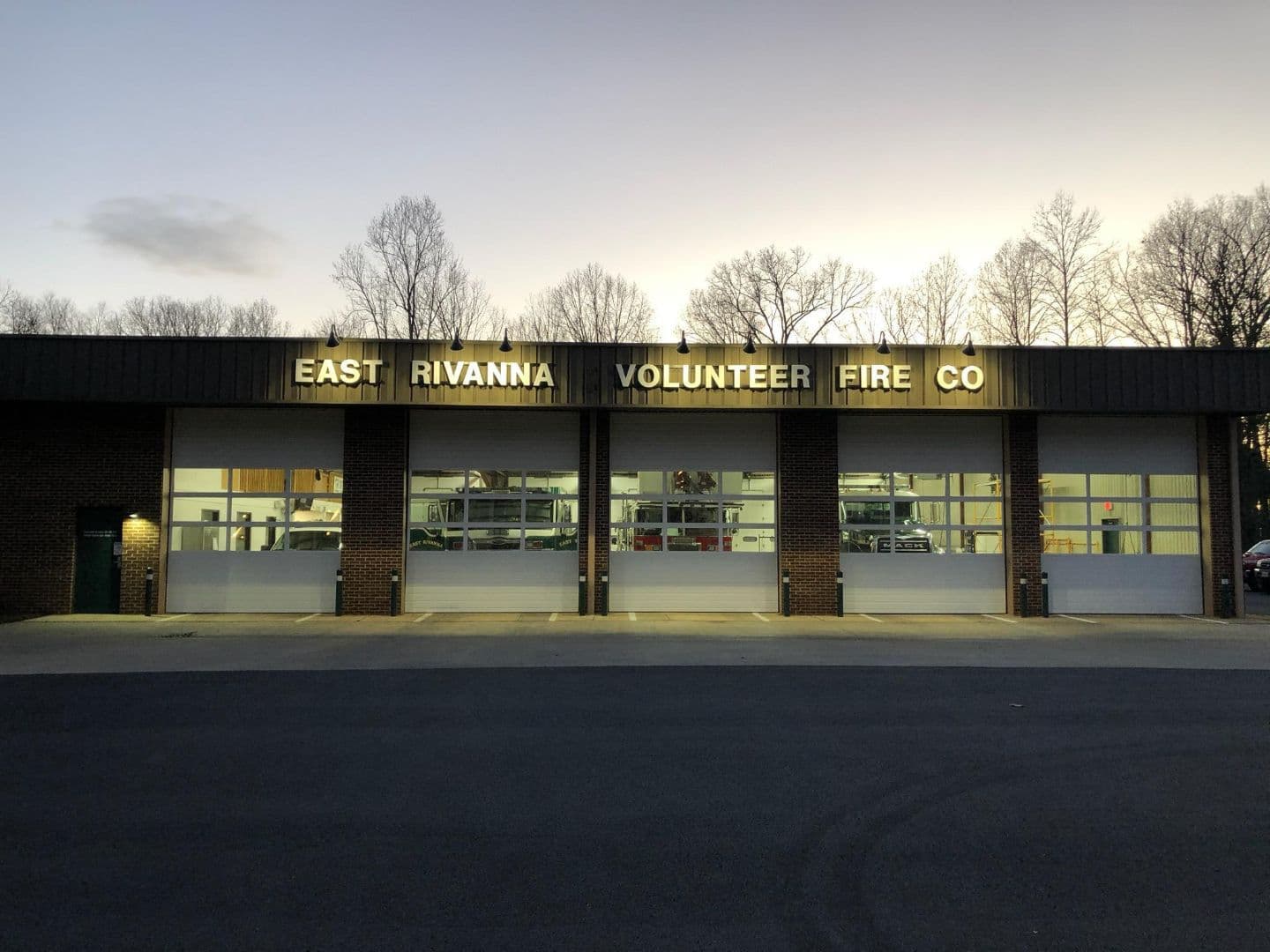
East Rivanna Volunteer Fire Co.
Keswick, Virginia
Permitting Requirements
Residential Electrical Permits
For residential properties, Linndale's fee schedule indicates:
- $2 permit fee per "120 volt duplex outlets, switches & lighting fixtures"
This simple fee structure reflects the village's straightforward approach to residential improvements and the limited administrative burden the small community places on homeowners.
What Property Owners Should Know
Understanding Linndale's Approach
Linndale's minimal lighting regulations stand in contrast to the comprehensive codes found in larger municipalities. This reflects:
- The village's small size and population
- Limited development and commercial activity
- Focus on practical governance rather than extensive regulation
- Emphasis on addressing specific community needs
Best Practices Despite Limited Code
Even without detailed regulations, property owners should consider:
- Safety First: Ensure lighting adequately illuminates walkways, stairs, and potential hazards
- Neighbor Consideration: Direct light downward and shield fixtures to prevent glare into neighboring properties
- Energy Efficiency: Choose efficient fixtures and consider timers or motion sensors to reduce unnecessary usage
- Quality Installation: Have lighting professionally installed to ensure electrical safety

Denver, Colorado
Supporting Linndale's Community Vision
Bock Lighting's Connection to Northeast Ohio Communities
As a Northeast Ohio manufacturer with roots dating back to 1918, Bock Lighting understands the varied needs of communities throughout the region. We recognize that smaller municipalities like Linndale often take pragmatic approaches to lighting regulations that focus on basic safety and community consideration rather than complex technical requirements.
Local Understanding for Local Needs
Bock's century of experience working with communities of all sizes provides us with unique insight into balancing practical lighting needs with community values. We appreciate Linndale's focus on maintaining local autonomy and addressing the specific needs of its residents.
Resources for Responsible Lighting
While Linndale may not have extensive lighting regulations, property owners can still benefit from understanding lighting best practices. Bock Lighting serves as an educational resource, helping property owners make informed choices about exterior lighting that respects neighbors while enhancing safety and functionality.
Community-Minded Approach
Our commitment to Northeast Ohio communities includes understanding the distinctive character and needs of villages like Linndale. We recognize the importance of maintaining community standards while providing practical lighting solutions that serve residents' everyday needs.
Conclusion
Linndale's approach to lighting regulation focuses on the basics: safety lighting for construction hazards, consideration for neighbors, and simple permitting requirements. This minimalist approach reflects the village's small size and practical governance philosophy.
While the village doesn't impose detailed technical specifications found in larger municipalities, property owners should still apply common sense principles: ensure adequate safety lighting, avoid creating nuisance for neighbors, and obtain proper permits for electrical work.
Understanding these limited but important requirements helps maintain Linndale's community standards while respecting its tradition of local autonomy and practical governance.