Lighting Requirements in Hancock County, Indiana
Lighting Regulations in Hancock County, Indiana: Balancing Historic Character with Modern Needs
Introduction
Established in 1828 and named after John Hancock, Hancock County, Indiana, has a rich historical heritage reflected in its architecture and community values. As the county has grown and developed around its county seat of Greenfield, local regulations have evolved to maintain the area's distinctive character while accommodating modern needs.
Lighting regulations play a crucial role in preserving Hancock County's historical charm while ensuring safety and functionality for residents and businesses. These regulations reflect the community's commitment to thoughtful development that honors its past while embracing the future.
Quick Reference Guide
- Maximum Color Temperature: 3,500 Kelvin for all exterior lighting
- Maximum Light Levels at Property Boundaries:
- Adjacent to commercial/industrial: 0.5 foot candles
- Adjacent to residential/agricultural: 0.2 foot candles
- Minimum Mounting Heights:
- Residential areas: 20 feet
- Commercial areas: 25 feet
- Industrial areas: 30 feet
- Street Light Requirements: Developments with density ≥0.5 units/acre must install street lighting at all intersections, entrances, curves, and cul-de-sacs
- Required Documentation: Professional photometric plan for all new developments


General Exterior Lighting Standards
Hancock County's lighting regulations (§156.077) aim to protect public safety while reducing unpleasant lighting conditions such as light trespass and light pollution. These standards help preserve the county's visual character while providing adequate illumination for safety and functionality.
Application Requirements
For new developments requiring a development plan, applicants must submit:
- A photometric plan with fixture details prepared by a certified lighting specialist
- A photometric report prior to occupancy permit issuance that verifies compliance
Basic Requirements for All Exterior Lighting
- Underground Electrical Service: All electrical service to outdoor lighting fixtures must be buried underground unless fixtures are mounted directly on buildings or utility poles
- Energy Efficiency: Timers, dimmers, and/or sensors should be used wherever practicable to reduce energy consumption
- Holiday Lighting Exemption: Seasonal holiday lighting is exempt from these regulations
Light Trespass Prevention
The county places strong emphasis on preventing light pollution and trespass:
- Dark Sky Compliance: Light trespass into the night sky and onto neighboring properties must be minimized using dark sky approved fixtures
- Fixture Location: All lighting fixtures and mounting poles must be located within the areas being illuminated
- Direct Light Control: No direct light should fall onto adjacent streets or properties
Specific Technical Requirements
Fixture Types and Specifications
Requirements vary based on adjacent land use:
- Adjacent to Residential: Full cutoff fixtures approved as "dark sky" fixtures
- Adjacent to Commercial/Industrial: Full cutoff or cutoff fixtures approved as "dark sky"
- Color Temperature Limit: Maximum 3,500 Kelvin for all exterior lighting
- Controls for Non-Residential: Commercial, institutional, and industrial uses without 24-hour operations must have dimmable lights connected to timers and motion sensors
Maximum Light Levels at Property Boundaries
- 0.5 foot candles when adjacent to industrial, commercial, or institutional uses
- 0.2 foot candles when adjacent to agricultural or residential uses
Mounting Height Requirements
Minimum mounting heights for street and parking lot light fixtures:
- 20 feet within agricultural and residential areas
- 25 feet within commercial and institutional areas
- 30 feet within industrial areas
.jpg&w=3840&q=75&dpl=dpl_HQSDfSq3sXBmGgMd8Lx4C9ugi9Qb)


Street Lighting Requirements
For developments with density equal to or greater than 0.5 units per acre, developers must install adequate street lighting.
Placement Requirements
Street lights must be installed at:
- All road intersections
- Curves
- Cul-de-sacs
- Development entrances
Minimum Illumination Levels
Street light spacing must comply with these minimum foot candle requirements:
- Residential entrances: 1.2 foot candles
- Residential streets: 0.5 foot candles
- Public/private parking lots: 1.2 foot candles
- Park areas with playgrounds or trails: 0.5 foot candles
Technical Specifications
- Component Quality: All lighting components must be utility quality columns and fixtures
- Compliance: Photovoltaic devices must conform to ANSI standard C136.10
- Design Flexibility: Decorative designs are encouraged where practical
Light Column Installation
- Foundation Placement: On back side of sidewalk or at least 9 feet from back of street curb
- Exception: May be reduced to 4 feet with straight/non-mountable curb
- Foundation Height: Maximum 4 inches above finished grade, minimum 36 inches below grade
- Fixture Height: 12 feet above foundation
- Luminaire Requirements:
- Environmentally friendly
- 150 watt high-pressure sodium lamp
- Globe made of acrylic or non-yellowing material (glass excluded)
- Must include canopy
Ownership & Maintenance
- All lighting equipment remains property of the developer or homeowner's association
- Developer/HOA responsible for all maintenance and operational costs
Special Purpose Lighting
Building Façade Lighting
- Light fixtures must be located, aimed, and shielded to direct light only onto the building façade
- Fixtures must not be directed toward adjacent streets or roads
- Lighting should wash the façade with light rather than creating a spotlight effect
- Buildings near residential areas may only use downward-facing façade lighting
Canopy Lighting (Gas Stations, Drive-Thrus)
- Light fixtures must be recessed flush with the canopy ceiling or use indirect lighting
- Lights cannot be mounted on top or sides of canopies
- Sides of canopies cannot be illuminated
Sign Illumination
- External lighting fixtures must be located, aimed, and shielded to direct light only onto the sign face
- Minimal light spillage permitted
- Fixtures must not be aimed toward adjacent streets, roads, or properties
- Internal illumination is restricted within 500 feet of residential areas
Athletic and Performance Facility Lighting
- Lighting must be specifically mounted and aimed so beams fall directly within the play/performance area
- Dual lighting system required: main event lighting plus alternate low-level system for maintenance
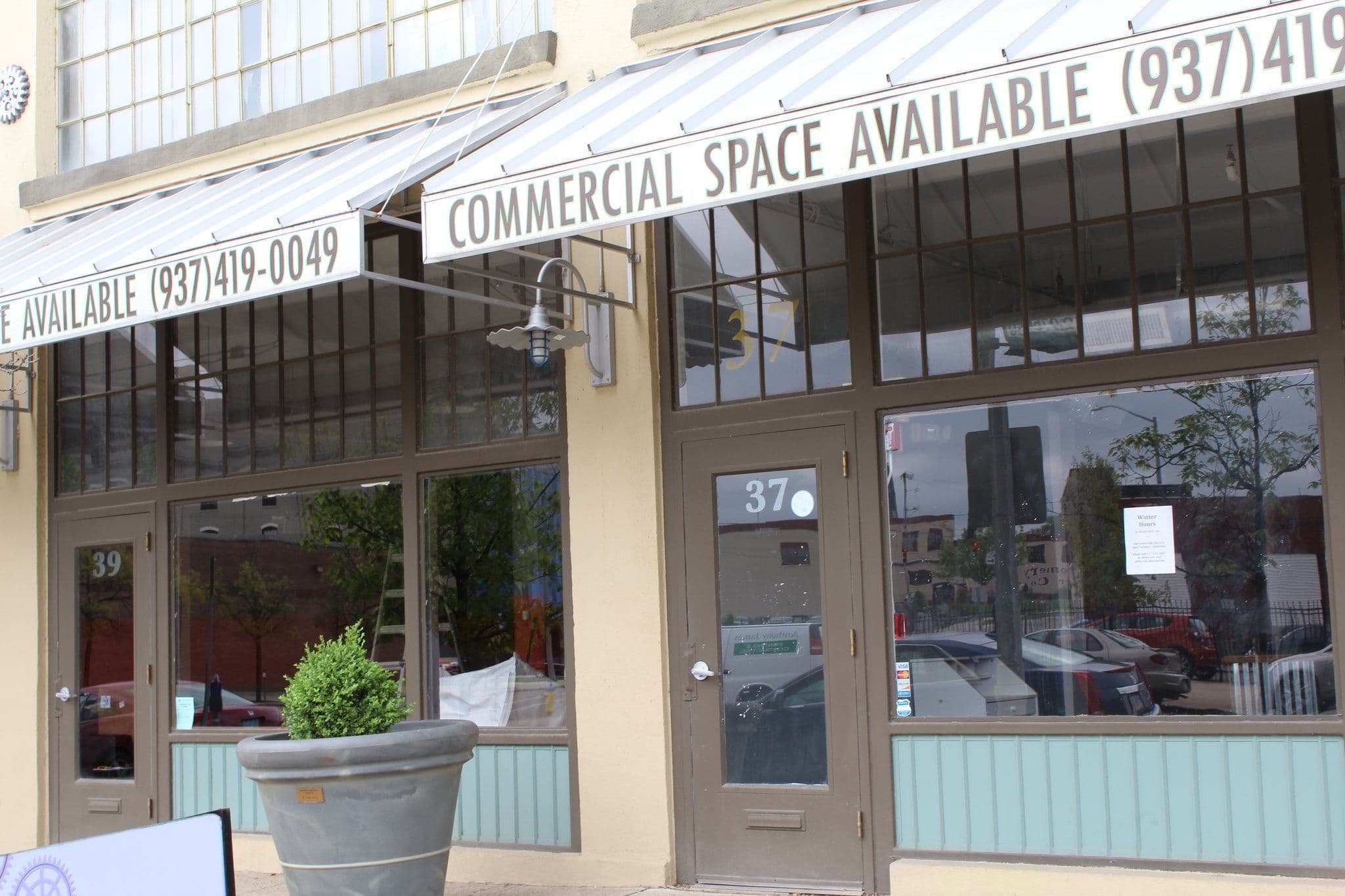
Dayton, Ohio
Security Lighting Standards
Security lighting must coordinate with other property lighting and:
For Non-Residential Areas:
- Be shielded and specifically aimed to illuminate only the intended area
- Include shields that prevent light source or lens from being visible from adjacent properties/streets
- Mounting poles located no more than 10 feet from the perimeter of the area to be illuminated
For Residential Areas:
- Use indirect and reflected lighting techniques
- Provide soft lighting under canopies, entry porches, or soffits
Supporting Hancock County's Lighting Vision
As a manufacturer with roots dating back to 1918, Bock Lighting understands the delicate balance communities like Hancock County strive to achieve between preserving historical character and meeting modern needs.
We appreciate Hancock County's thoughtful approach to lighting regulations that protect its unique architectural heritage while ensuring safety and functionality. Our team shares the county's commitment to responsible lighting practices that minimize light pollution while enhancing community spaces.
Bock's experience with historic communities throughout the Midwest gives us valuable perspective on lighting solutions that complement traditional architecture while incorporating energy-efficient technology. We're proud to serve as a resource for communities seeking to implement lighting that respects local character and regulations.
Our understanding of regional architectural styles and lighting needs allows us to support communities like Hancock County in maintaining their distinctive character while meeting contemporary standards for safety and sustainability.
Conclusion
Hancock County's lighting regulations reflect its commitment to preserving its historical character while providing safe, functional lighting for residents and businesses. By establishing clear standards for fixture types, light levels, and installation requirements, the county has created a framework that protects property values and enhances quality of life.
Property owners planning new construction or renovations should consult with lighting professionals familiar with these regulations to ensure compliance and avoid costly corrections. By understanding and following these guidelines, residents and businesses contribute to maintaining Hancock County's unique charm for future generations.
For complete details on lighting requirements, always consult the official Hancock County zoning code or contact the county planning department directly.